
Welcome!
Welcome to the new CancerGRACE.org! Explore our fresh look and improved features—take a quick tour to see what’s new.




Dr. Jack West is a medical oncologist and thoracic oncology specialist who is the Founder and previously served as President & CEO, currently a member of the Board of Directors of the Global Resource for Advancing Cancer Education (GRACE)
In Seattle, we just had an evening program for lung cancer awareness that included issues in lung cancer largely focused on rectifying the disparity in lung cancer funding and awareness compared with other cancers, but also on tobacco control and screening. One of the talks was by a pulmonologist colleague from the University of Washington, Dr. Jason Chien, who highlighted several notable points on smoking patterns and how they are related to risk of lung cancer.
The first point is that while we talk a lot about never-smokers with lung cancer, tobacco is still by far the most important risk factor contributing to lung cancer. Here's a list of other variables, which pale in their impact compared to tobacco ("relative risk" means the multiplier compared to someone without a risk factor, so a relative risk of 2 means that a person with that exposure has twice the risk of somoene without it):

Tragically, unlike most or perhaps all other deadly diseases in the world, lung cancer has a major industry promoting the exposure to this deadly risk factor:

Despite this force, smoking patterns have been declining over time, particularly in states in which there are stronger smoking cessation efforts, and less so in states that rely on tobacco as a leading component of their economy. Overall, it's about 20% overall and gradually declining over time:

This is largely because many people are quitting successfully, but as a side effect, there are growing ranks of ex-smokers in the US, now approaching 50 million. Fortunately, this has been associated with a significant decline in lung cancer deaths among men, and the start of a decline in lung cancer deaths now among women, who overall took up smoking later than men and have been a little slower to quit -- we hope the curves for women follow the decline seen in men over the next few decades:

Next, we'll turn to how much and how quickly the risk of smoking declines after a person quits smoking.
Please feel free to offer comments and raise questions in our
discussion forums.

Dr. Singhi's reprise on appropriate treatment, "Right patient, right time, right team".
While Dr. Ryckman described radiation oncology as "the perfect blend of nerd skills and empathy".
I hope any...
My understanding of ADCs is very basic. I plan to study Dr. Rous’ discussion to broaden that understanding.
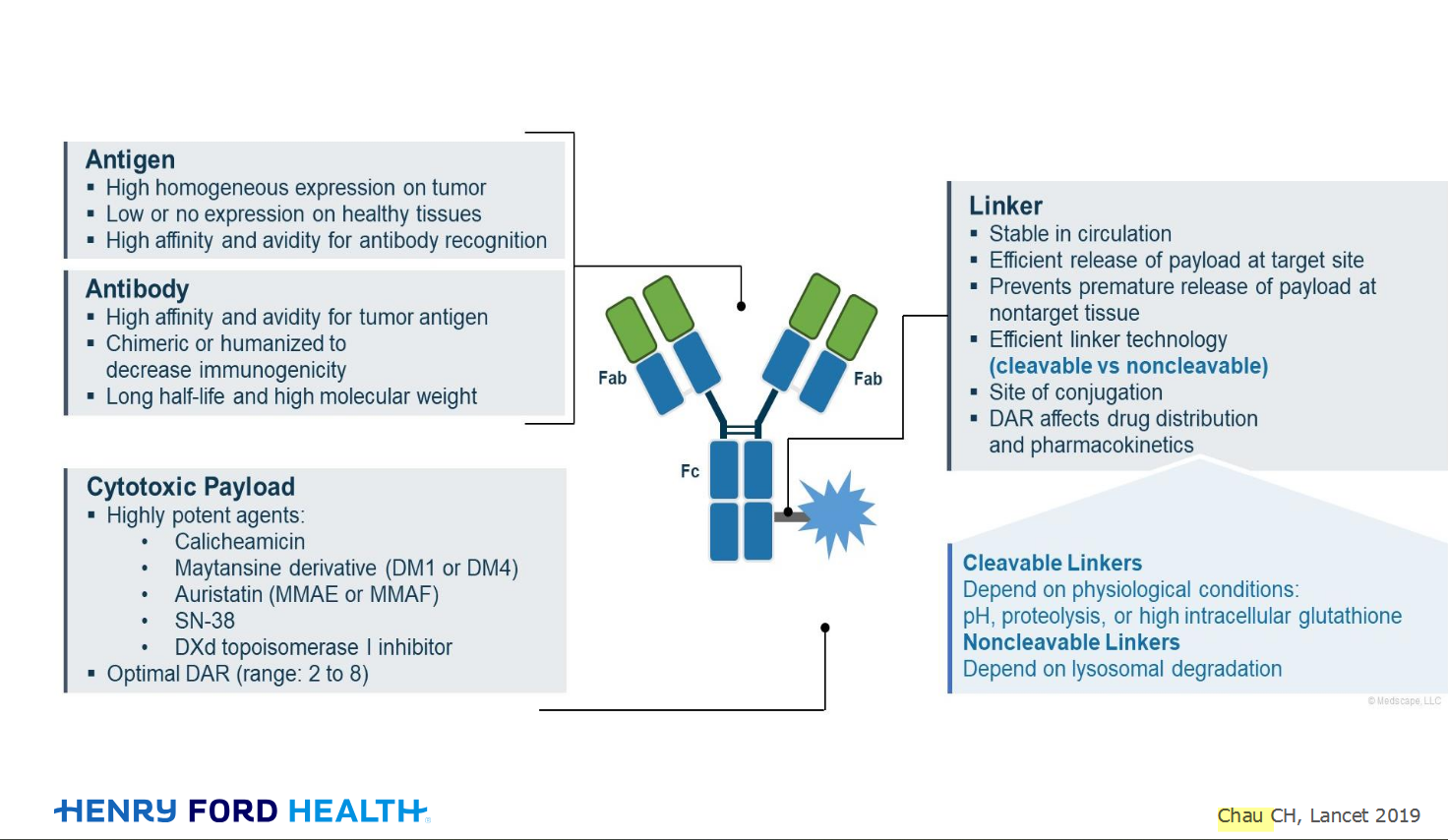
An antibody–drug conjugate (ADC) works a bit like a Trojan horse. It has three main components:
Bispecifics, or bispecific antibodies, are advanced immunotherapy drugs engineered to have two binding sites, allowing them to latch onto two different targets simultaneously, like a cancer cell and a T-cell, effectively...
The prefix “oligo–” means few. Oligometastatic (at diagnosis) Oligoprogression (during treatment)
There will be a discussion, “Studies in Oligometastatic NSCLC: Current Data and Definitions,” which will focus on what we...
Radiation therapy is primarily a localized treatment, meaning it precisely targets a specific tumor or area of the body, unlike systemic treatments (like chemotherapy) that affect the whole body.
The...

Welcome to the new CancerGRACE.org! Explore our fresh look and improved features—take a quick tour to see what’s new.
A Brief Tornado. I love the analogy Dr. Antonoff gave us to describe her presentation. I felt it earlier too and am looking forward to going back for deeper dive.