
Welcome!
Welcome to the new CancerGRACE.org! Explore our fresh look and improved features—take a quick tour to see what’s new.



Dr. Jack West is a medical oncologist and thoracic oncology specialist who is the Founder and previously served as President & CEO, currently a member of the Board of Directors of the Global Resource for Advancing Cancer Education (GRACE)
In January, 2015, the CheckMate 017 trial of the immune checkpoint inhibitor Opdivo (nivolumab) versus the standard chemo agent Taxotere (docetaxel) as second line therapy for patients with advanced squamous NSCLC was reported in a press release to be positive for a significant improvement in overall survival. No further details were offered at that time, but additional data were submitted to the FDA just days before the FDA approved Opdivo on March 4, 2015 and made it commercially available for these patients (with the FDA deserving credit for seemingly waiting in a conference room to go through an immediate approval process once the full data was supplied). We have since learned that Opdivo was associated with a significant, 3.2 month improvement in median overall survival, 9.2 vs. 6.0 months, but additional data await presentation at the annual ASCO meeting in Chicago in late May/early June.
Bristol-Myers-Squibb (BMS) ran a parallel trial called CheckMate 057, also directly comparing Opdivo to docetaxel as second line therapy for patients with non-squamous NSCLC, which comprises about 75-80% of NSCLC patients in North America. That trial completed enrollment around the same time as the squamous trial, but no results were forthcoming until this week, when a press release from BMS noted that an interim data review from this trial has demonstrated a significant survival benefit again for Opdivo -- with no additional data offered yet.
What does this mean for lung cancer patients? Lung cancer specialists have been following the trials for years and had been very optimistic that both trials would emerge as positive for a survival benefit with Opdivo, but after the FDA approval of this agent for the minority of patients with squamous NSCLC, we could only be hopeful that we'd see the same pattern of a favorable press release, rapid FDA approval once submission of the relevant data to the FDA was completed, and then prompt availability of the agent to the much broader advanced NSCLC patient community...but at some undetermined point in the future.
We now have a starting point for the next timeline, which could lead us to an approval for in non-squamous NSCLC by the time of the ASCO meeting, if not before. In the meantime, I hope to find that my requests for insurer coverage for Opdivo for my patients with chemotherapy-pretreated advanced non-squamous NSCLC may be granted more easily. I've spoken with colleagues who have had some success getting coverage for Opdivo for their non-squamous NSCLC patients, but with the FDA approval for Opdivo pretty much imminent, I'd like to find that insurers don't bother to pursue policies that are histology-specific, since that policy will have a short half-life.
In the meantime, it's great to be able to look forward to another therapy. As new immunotherapy agents and combinations try to find their way into the marketplace, there will now be a higher bar to clear, which is great for lung cancer patients.
Please feel free to offer comments and raise questions in our
discussion forums.

Dr. Singhi's reprise on appropriate treatment, "Right patient, right time, right team".
While Dr. Ryckman described radiation oncology as "the perfect blend of nerd skills and empathy".
I hope any...
My understanding of ADCs is very basic. I plan to study Dr. Rous’ discussion to broaden that understanding.
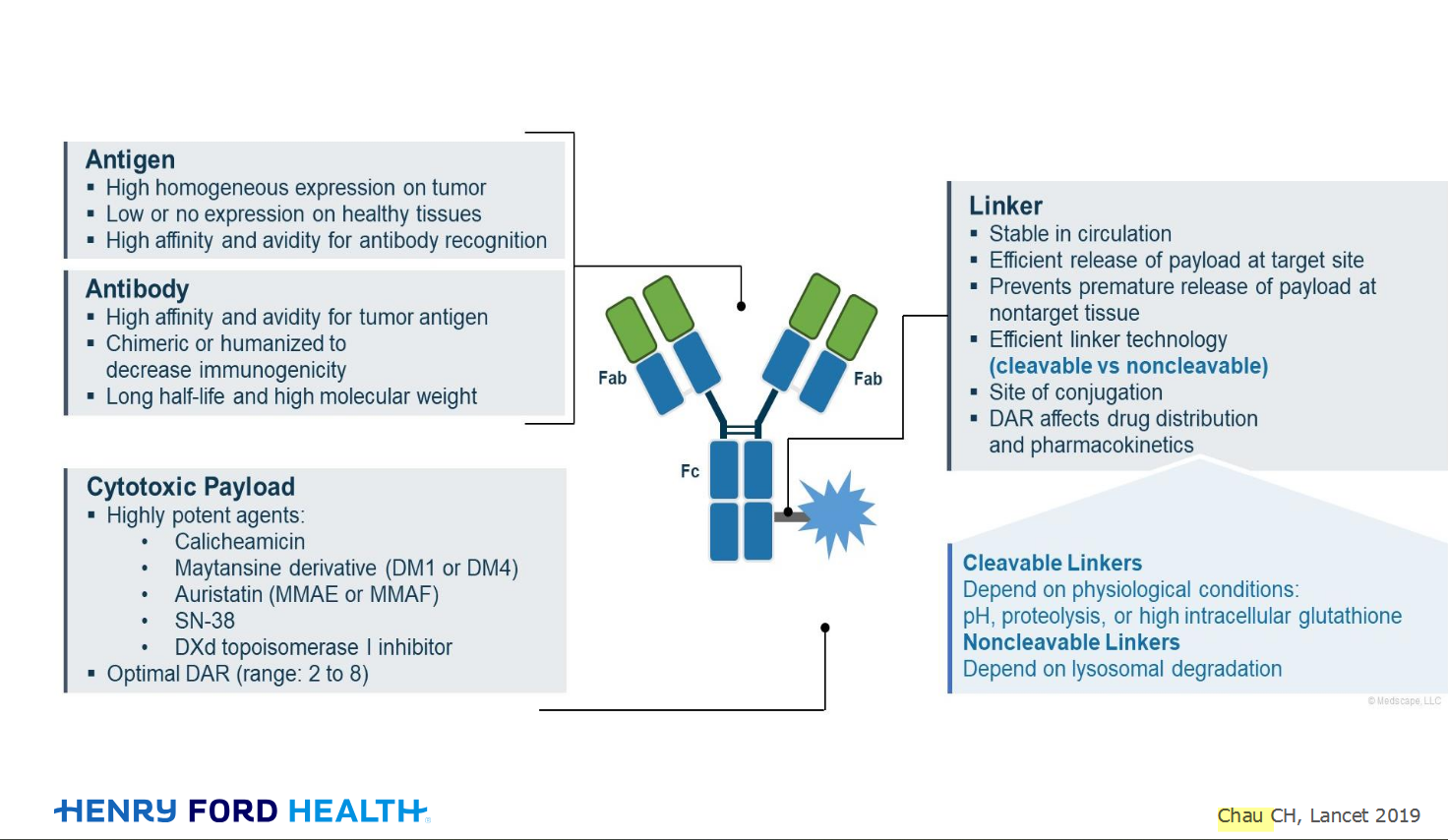
An antibody–drug conjugate (ADC) works a bit like a Trojan horse. It has three main components:
Bispecifics, or bispecific antibodies, are advanced immunotherapy drugs engineered to have two binding sites, allowing them to latch onto two different targets simultaneously, like a cancer cell and a T-cell, effectively...
The prefix “oligo–” means few. Oligometastatic (at diagnosis) Oligoprogression (during treatment)
There will be a discussion, “Studies in Oligometastatic NSCLC: Current Data and Definitions,” which will focus on what we...
Radiation therapy is primarily a localized treatment, meaning it precisely targets a specific tumor or area of the body, unlike systemic treatments (like chemotherapy) that affect the whole body.
The...

Welcome to the new CancerGRACE.org! Explore our fresh look and improved features—take a quick tour to see what’s new.
A Brief Tornado. I love the analogy Dr. Antonoff gave us to describe her presentation. I felt it earlier too and am looking forward to going back for deeper dive.