
Welcome!
Welcome to the new CancerGRACE.org! Explore our fresh look and improved features—take a quick tour to see what’s new.



Tarceva and Iressa (some of you may remember this drugs from a few years ago) have certainly become popular drugs for treating lung cancer, specially in the adenocarcinoma type of lung cancer. Drs. Pennell and West have discussed tarceva in other posts on this website – how it works, who benefits the most, what is the impact of certain mutations on the effect of the drug. Unfortunately, we are also too well familiar with the fact that these drugs don’t work forever and the cancer relapses even after having initially responded well. Fortunately, lung cancer scientists all over the world have been able to identify reasons why tumors become resistant to drugs like tarceva.
It was in 2004 that the first EGFR mutations were discovered. These mutations such as the deletion 19 or L858R mutation made the tumor more sensitive to tarceva and iressa. Later it was found that in tumors that were exposed to such drugs, the tumor develops a secondary mutation that was described as T790M mutation. This new mutation blocks the binding of tarceva in the tumor so that tarceva cannot work anymore. This is a very important lesson for us in learning how cancers can outsmart our treatment strategy. T790M mutation is not the only reason why tumors don’t respond to tarceva. MET is a gene that helps tumor grow. In people without cancer, opposing forces keep tumor promoter genes and tumor suppressor genes in balance so that there is no growth of tumor. However, when this balance is lost, tumor promoter genes become more active causing tumors to grow. MET is one such promoter gene. Recently, European investigators studied lung tumors that were removed from people who had lung cancer surgery. In their study, they showed that survival was shorter when high amounts of MET was present in the tumor.  In this recent study, MET gene was found to be in excessive amounts (amplified) only in about 4%. However, in patients who have been treated with drugs like tarceva, the frequency of finding MET amplified is about 20%. This tells that MET gene may play a role in the survival of the fittest and that it amplifies when the tumor is threatened with a drug that intends to shut the tumor down. T790M and MET are the biggest reasons why drugs like tarceva eventually stop working. Fortunately, new generation drugs have been identified that may be able to overcome this situation. These drugs are in phase I and phase II clinical trials currently.
  So while drug resistance is a disappointing scenario, optimism remains as we are able to move forward by 1) identifying mechanisms of resistance 2) designing drugs that will overcome resistance. All of this has been possible by not just scientists evaluating tumors, but most importantly patients who volunteered parts of their tumor for research. As lung cancer treatments become more and more personalized, each patient will eventually receive a treatment based on the specific genes or proteins present in their tumor. In other words, while cancer is our formidable enemy, the more we learn from it, the better we can prepare our defense.
Please feel free to offer comments and raise questions in our
discussion forums.

Dr. Singhi's reprise on appropriate treatment, "Right patient, right time, right team".
While Dr. Ryckman described radiation oncology as "the perfect blend of nerd skills and empathy".
I hope any...
My understanding of ADCs is very basic. I plan to study Dr. Rous’ discussion to broaden that understanding.
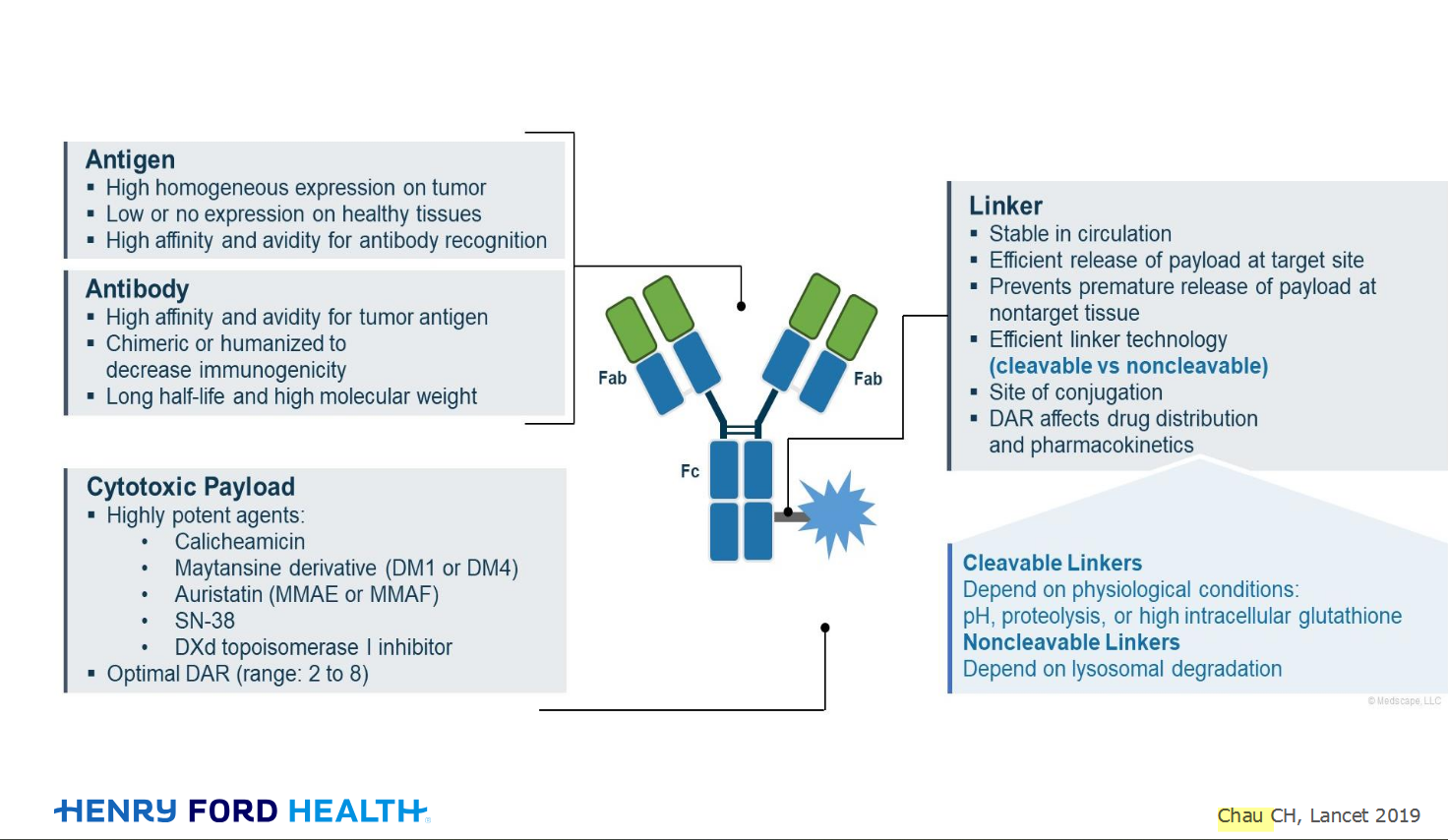
An antibody–drug conjugate (ADC) works a bit like a Trojan horse. It has three main components:
Bispecifics, or bispecific antibodies, are advanced immunotherapy drugs engineered to have two binding sites, allowing them to latch onto two different targets simultaneously, like a cancer cell and a T-cell, effectively...
The prefix “oligo–” means few. Oligometastatic (at diagnosis) Oligoprogression (during treatment)
There will be a discussion, “Studies in Oligometastatic NSCLC: Current Data and Definitions,” which will focus on what we...
Radiation therapy is primarily a localized treatment, meaning it precisely targets a specific tumor or area of the body, unlike systemic treatments (like chemotherapy) that affect the whole body.
The...

Welcome to the new CancerGRACE.org! Explore our fresh look and improved features—take a quick tour to see what’s new.
A Brief Tornado. I love the analogy Dr. Antonoff gave us to describe her presentation. I felt it earlier too and am looking forward to going back for deeper dive.