
Welcome!
Welcome to the new CancerGRACE.org! Explore our fresh look and improved features—take a quick tour to see what’s new.


Dr. Jack West is a medical oncologist and thoracic oncology specialist who is the Founder and previously served as President & CEO, currently a member of the Board of Directors of the Global Resource for Advancing Cancer Education (GRACE)
Here's another case in the recording I did with Drs. Jyoti Patel from Northwestern and Bob Doebele from University of Colorado, discussing a series of perplexing cases in lung cancer management, then combining their comments with the responses from several other terrific experts (Drs. Suresh Ramalingam, Jonathan Goldman, Julie Brahmer, Heather Wakelee, and Karen Reckamp) about the same case. From each one, you can get a sense of the variability in how different lung cancer experts share the same set of data but have their own interpretation and style for cases where there are significant gaps in what the data tell us.
This particular case is one we struggle with all the time, and one for which many people have asked questions here. Once someone with unresectable stage III NSCLC has completed initial chemo/radiation, typically over an approximately seven week period, should we recommend any additional treatment after that. We are generally tempted to do so, in hopes of providing better results than what we might expect without it, but we don't have evidence that it helps. I think you'll get a clear sense of the uncertainty (at least mine), but several of the speakers also note their different mindset for those patients treated with weekly carbo/Taxol (paclitaxel) (which we believe doesn't give meaningful systemic dosing to eradicate micrometastatic disease, but it can help make the radiation given concurrently more effective) versus "full dose" cisplatin/etoposide (which we feel does treat possible distant disease in addition to helping make the radiation more effective where it is directed).
So here's the audio and video versions of the podcast, along with the transcript and figures from the presentation.
[powerpress]
grace-cases-stage-iiib-nsclc-chemort-and-consolidation-q-audio-podcast
grace-cases-stage-iiib-nsclc-chemort-and-consolidation-q-transcript
grace-cases-stage-iiib-nsclc-chemort-and-consolidation-q-figures
We've got several more case-based podcasts in this series, but the next in the queue is the webinar by Dr. Mario Lacouture on managing skin, hair, and nail-related side effects in cancer patients. Look for that one soon!
Please feel free to offer comments and raise questions in our
discussion forums.
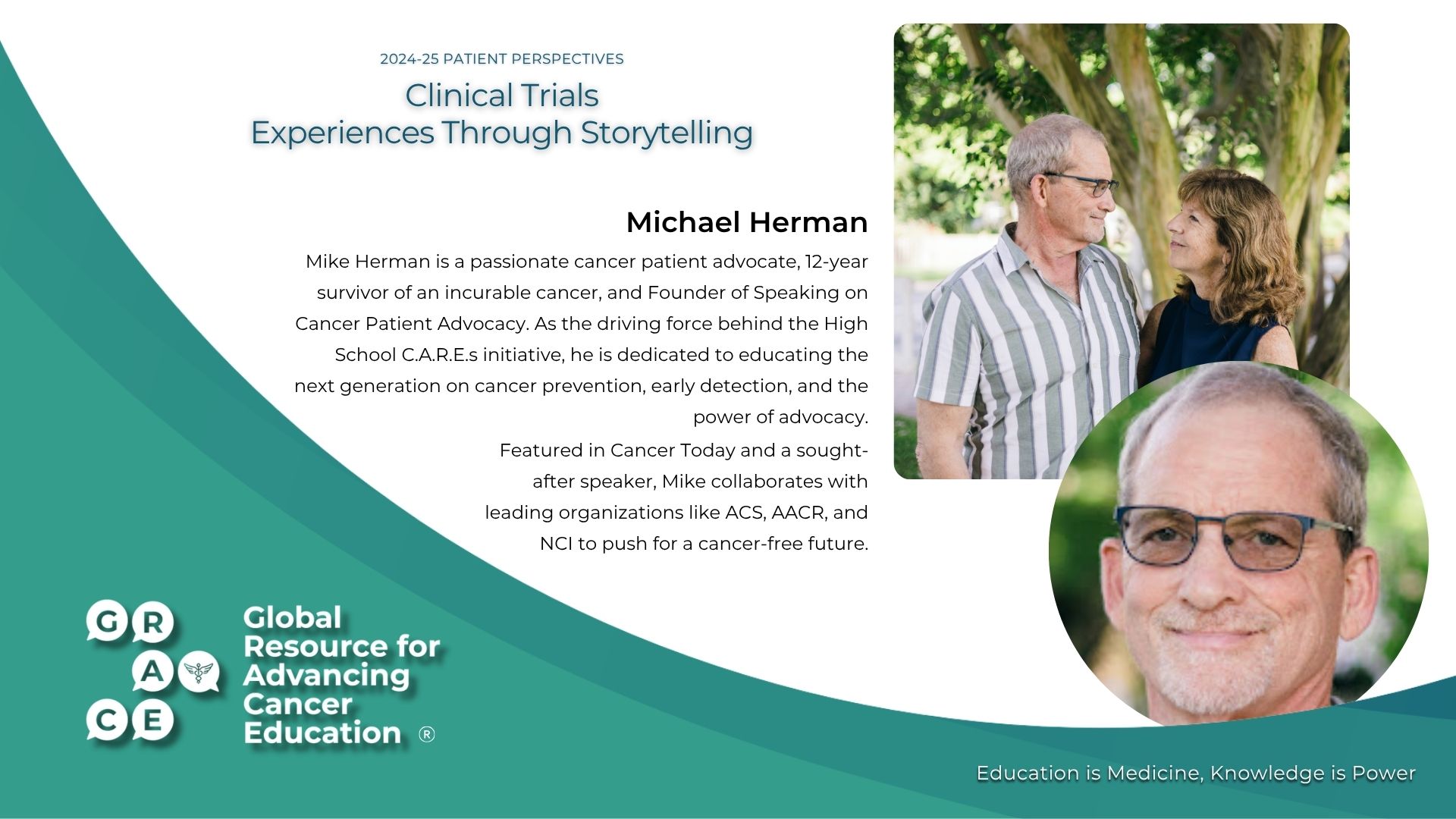
Dr. Singhi's reprise on appropriate treatment, "Right patient, right time, right team".
While Dr. Ryckman described radiation oncology as "the perfect blend of nerd skills and empathy".
I hope any...
My understanding of ADCs is very basic. I plan to study Dr. Rous’ discussion to broaden that understanding.
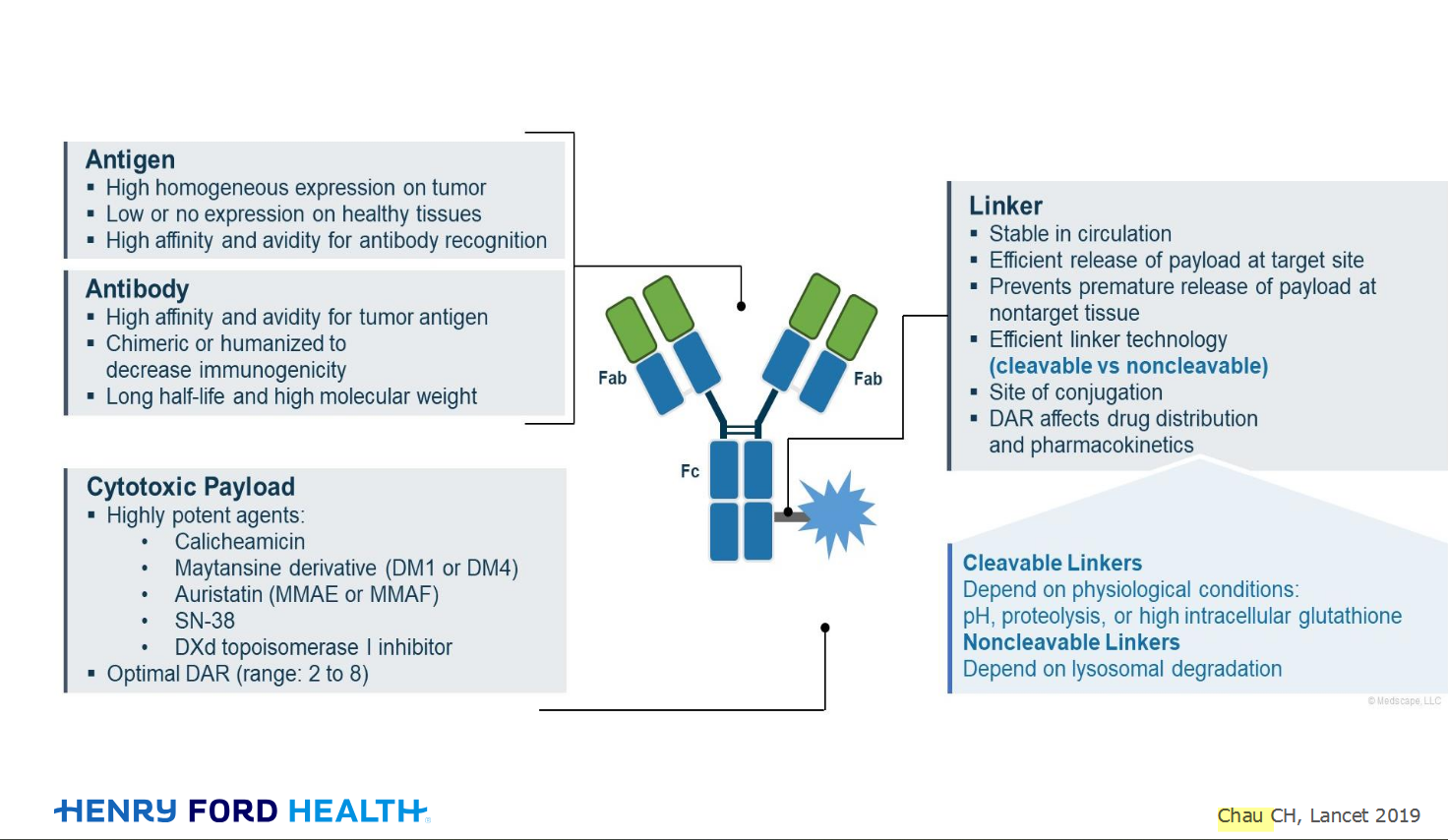
An antibody–drug conjugate (ADC) works a bit like a Trojan horse. It has three main components:
Bispecifics, or bispecific antibodies, are advanced immunotherapy drugs engineered to have two binding sites, allowing them to latch onto two different targets simultaneously, like a cancer cell and a T-cell, effectively...
The prefix “oligo–” means few. Oligometastatic (at diagnosis) Oligoprogression (during treatment)
There will be a discussion, “Studies in Oligometastatic NSCLC: Current Data and Definitions,” which will focus on what we...
Radiation therapy is primarily a localized treatment, meaning it precisely targets a specific tumor or area of the body, unlike systemic treatments (like chemotherapy) that affect the whole body.
The...

Welcome to the new CancerGRACE.org! Explore our fresh look and improved features—take a quick tour to see what’s new.
A Brief Tornado. I love the analogy Dr. Antonoff gave us to describe her presentation. I felt it earlier too and am looking forward to going back for deeper dive.