
Welcome!
Welcome to the new CancerGRACE.org! Explore our fresh look and improved features—take a quick tour to see what’s new.



At GRACE, we’re committed to helping patients and families understand the latest tools in cancer diagnosis and treatment. Today, let’s take a closer look at liquid biopsies—a fast-growing technology that is changing how doctors detect and treat cancer.
When facing a cancer diagnosis, one of the most important steps is finding the treatment that’s right for you. To do that, doctors need detailed information about the cancer—especially its genetic makeup. Traditionally, this has been done through a tissue biopsy, where a sample of the tumor is removed and analyzed.
Today, there’s an exciting new option called a liquid biopsy. This simple blood test can provide the same critical information—sometimes faster and with fewer challenges. In this article, Dr. Luis Raez, Medical Director of the Memorial Cancer Institute, explains how liquid biopsies work, why they matter, and how they may transform cancer care in the years to come.
A liquid biopsy is a simple blood test that looks for cancer-related genetic changes (called mutations or alterations). Instead of relying only on a tissue biopsy (where a piece of the tumor is removed and analyzed), liquid biopsies allow doctors to study cancer using just a blood sample. This test can identify important genetic information that helps doctors choose the most effective, personalized treatment for each patient.
Dr. Raez explains that liquid biopsies are still underused, even though they have tremendous potential. Currently, they are most often used in lung cancer patients with advanced disease—but their benefits could expand much further in the near future.
Here are two key ways liquid biopsies are making a difference today:
When There Isn’t Enough Tissue
About 20% of the time, doctors don’t get enough tissue during a biopsy to run all the necessary tests. Without this genetic information, patients could miss out on targeted therapies that can extend life for years. For example, patients with certain alterations, like ALK, can live 8–9 years or more with the right treatment—even with advanced cancer. In these cases, a liquid biopsy can provide the missing information and open the door to life-changing therapies.
Liquid biopsies deliver results in about 8–9 days—much faster than traditional tissue biopsies, which can take several weeks. Tissue samples need to be carefully processed, shipped to specialized labs, and analyzed—a process that's especially time-consuming for patients treated at community hospitals.
Here's where the dual approach makes a real difference:
Many oncologists now order both a liquid biopsy and a tissue biopsy at the same time. Because the liquid biopsy results come back first, doctors can often make a treatment decision right away—this happens about 80% of the time. If more detailed information is needed, the tissue biopsy results arrive later to complete the picture.
While liquid biopsies are still relatively new and currently used in only a small percentage of cancer cases, their potential is enormous. Dr. Raez predicts that we'll see rapid growth in their use over the next 2–3 years, with applications expanding far beyond lung cancer to other cancer types.
Ongoing research is revealing that liquid biopsies are more than just a backup option when tissue isn't available. They're on track to become a frontline tool in cancer diagnosis and treatment planning—offering doctors a faster, less invasive way to access the genetic information that shapes personalized care.
As the technology continues to advance and more evidence emerges, liquid biopsies may soon become a standard part of the cancer care toolkit for patients across many diagnoses.
The content of this article has been algorithmically generated by an AI model trained on a wide range of data and is based on a Grace's video transcript from our
Liquid Biopsy in Lung Cancer 2025 Importance of Testing Program - https://youtu.be/U1ZVrmDwX6c Verified by Joseph Steward, Medical Writer.
Every effort has been made to ensure the quality and reliability of the content; however, limitations, inaccuracies, or biases may exist. The content should not be considered a substitute for professional advice, and we recommend seeking professional guidance and independently verifying the information before making decisions based on this content.
Please feel free to offer comments and raise questions in our
discussion forums.

Hi app.92, Welcome to Grace. I'm sorry this is late getting to you. And more sorry your mum is going through this. It's possible this isn't a pancoast tumor even though...
A Brief Tornado. I love the analogy Dr. Antonoff gave us to describe her presentation. I felt it earlier too and am looking forward to going back for deeper dive.
Dr. Singhi's reprise on appropriate treatment, "Right patient, right time, right team".
While Dr. Ryckman described radiation oncology as "the perfect blend of nerd skills and empathy".
I hope any...
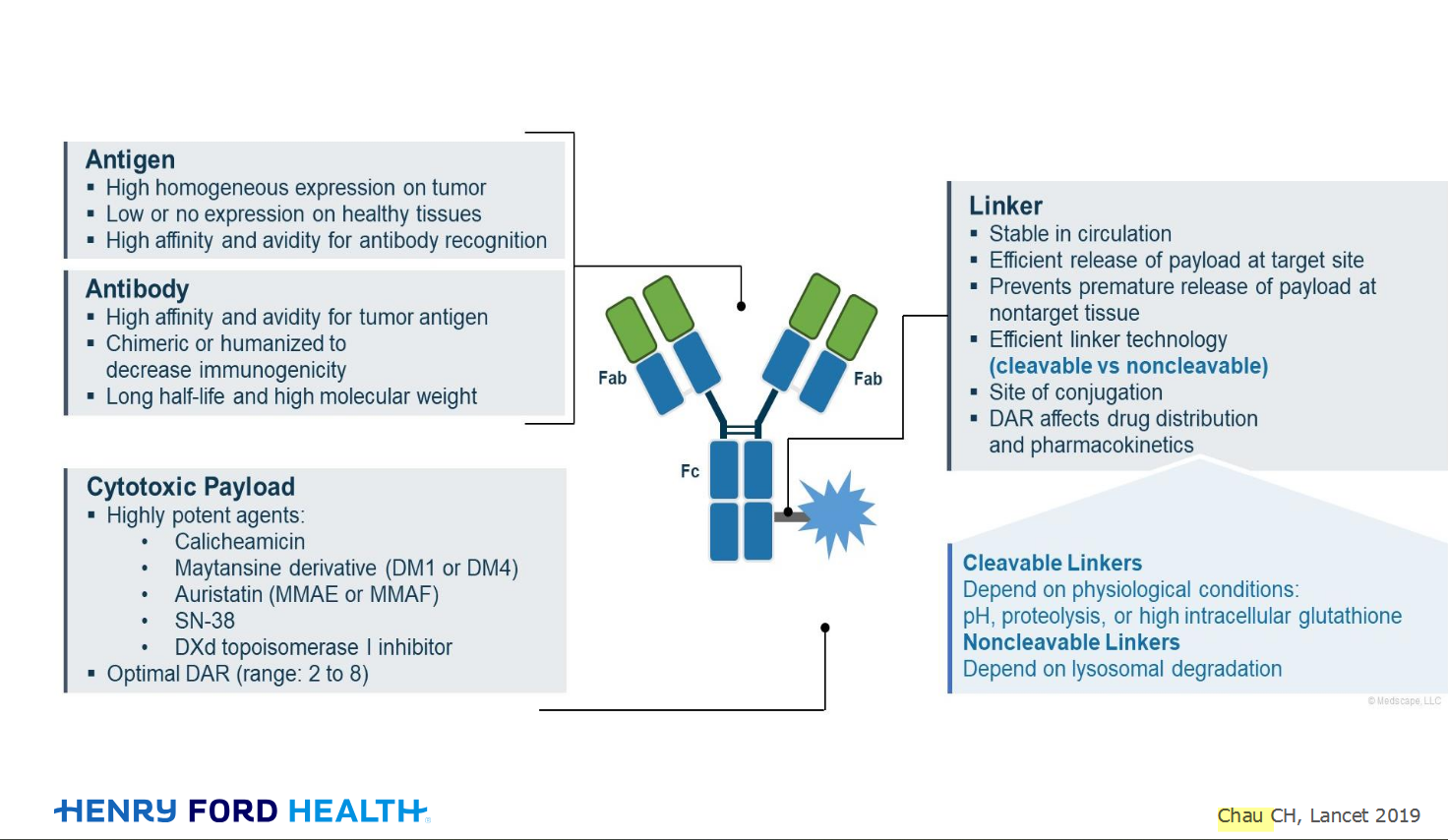
My understanding of ADCs is very basic. I plan to study Dr. Rous’ discussion to broaden that understanding.
Here's the webinar on YouTube. It begins with the agenda. Note the link is a playlist, which will be populated with shorts from the webinar on specific topics
An antibody–drug conjugate (ADC) works a bit like a Trojan horse. It has three main components:

Welcome to the new CancerGRACE.org! Explore our fresh look and improved features—take a quick tour to see what’s new.