Welcome!
Welcome to the new CancerGRACE.org! Explore our fresh look and improved features—take a quick tour to see what’s new.



Displaying Results 31 - 45 of 46
Dr. Heather Wakelee, Stanford University Medical Center, lists standard adjuvant chemotherapy regimens, comparing their administration and uses.
Transcript Historically, lung cancer has been treated with a large incision between the ribs, and in the early-mid ‘90s we began to investigate uses of the laparoscope, which was used to do gallbladders and so forth, in the chest. So we began using the devices to do more limited resections with this
Dr. David Harpole, Duke University Medical Center, describes the mediastinoscopy and its use in lung cancer staging.
Dr. David Harpole, Duke University Medical Center, details the methods thoracic surgeons use to assess a patient's fitness for surgery.
Dr. David Harpole, Duke University Medical Center, describes how he assists patients with the surgical decision-making process.

Dr. Gerard Silvestri, Medical University of South Carolina, describes the steps necessary to work up a lung cancer diagnosis, from initial scan to choice of treatment.
Dr. Gerard Silvestri, Medical University of South Carolina, defines pulmonary function testing, and describes how lung cancer surgeons use them.
Dr. Gerard Silvestri, Medical University of South Carolina, discusses the use of PET scans in lung cancer workup.
Dr. Gerard Silvestri, Medical University of South Carolina, describes several procedures used to obtain biopsy tissue in order to diagnose lung cancer.
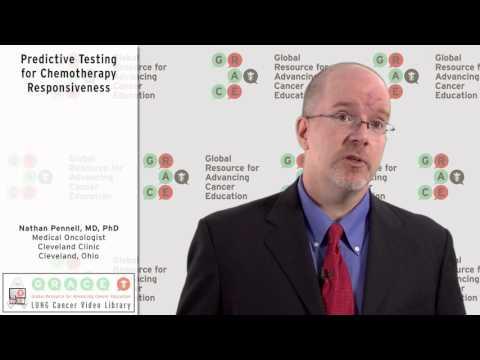
Dr. Nathan Pennell, Cleveland Clinic, evaluates chemotherapy sensitivity assays, describing the difficulties inherent in predicting response to chemotherapy agents.

Dr. Mark Socinski, University of Pittsburgh Medical Center, discusses the factors to consider in defining resectability in stage IIIa lung cancer.
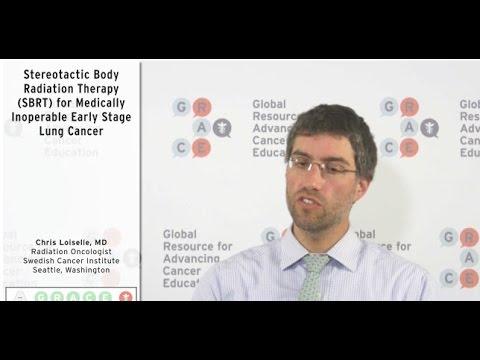
Dr. Jeffrey Bradley, Radiation Oncologist at Washington University in St. Louis, describes the history and current use of stereotactic radiation therapy for inoperable lung lesions.Dr. Jeffrey Bradley, Radiation Oncologist at Washington University in St. Louis, describes the history and current use
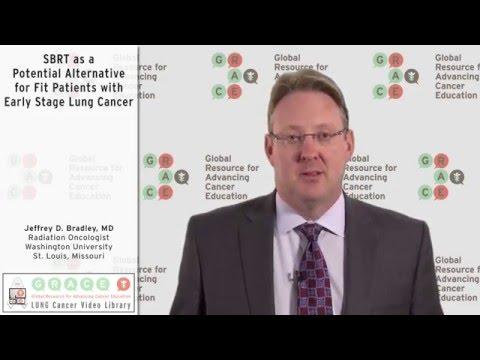
Dr. Jeffrey Bradley, Radiation Oncologist at Washington University in St. Louis, provides evidence for the use of stereotactic body radiation therapy as an alternative to surgery for operable early stage lung cancer.
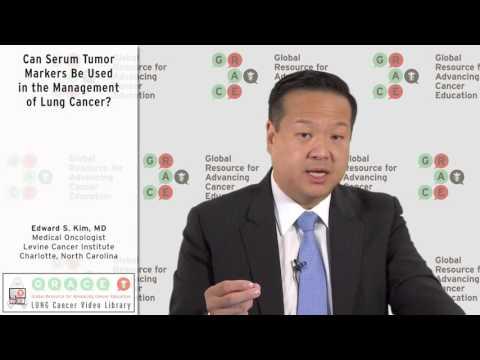
Dr. Edward S. Kim from the Levine Cancer Institute in Charlotte, NC describes the use of serum tumor markers in various types of cancer, and the lack of a useful serum tumor marker in lung cancer.
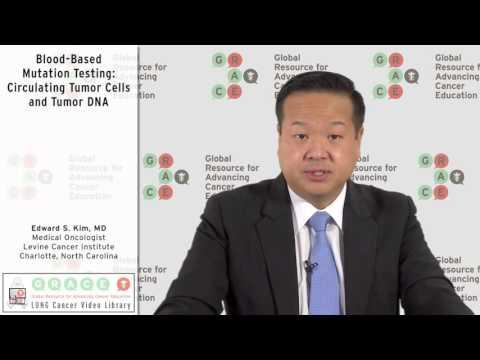
Dr. Ed Kim from the Levine Cancer Institute reviews the potential advantages and current limitations of blood-based testing for molecular markers using circulating tumor cells and circulating tumor DNA in identifying clinically important mutations.

Welcome to the new CancerGRACE.org! Explore our fresh look and improved features—take a quick tour to see what’s new.