

Welcome!
Welcome to the new CancerGRACE.org! Explore our fresh look and improved features—take a quick tour to see what’s new.




Dr. Jeffrey Bradley, Radiation Oncologist at Washington University in St. Louis, provides evidence for the use of stereotactic body radiation therapy as an alternative to surgery for operable early stage lung cancer.
Transcript
There has been a growing interest in stereotactic body radiation therapy in the United States and across the world. As patients have come to learn about this, they have sought alternatives to surgery today. Now, surgical techniques have improved — minimally invasive surgery has proven to be quite effective in eradicating early stage lung cancer, but there is a good alternative in stereotactic body radiation therapy, and the literature is coming out now that SBRT probably offers equivalent cure rates and equivalent outcomes to minimally invasive surgery or lobectomy for early stage lung cancer.
The best example of that is a randomized trial published in The Lancet Oncology this past May. It was a randomized trial from two centers, or two groups, one in the United States — an Accuray trial comparing lobectomy to radiosurgery or stereotactic body radiation therapy. The second trial was in the Netherlands, the ROSEL trial, and it also compared patients with lobectomy to stereotactic radiation therapy. Neither trial was able to meet its accrual goals — both under-accrued and were closed due to lack of accrual. So, taken individually, these trials couldn’t give us the answer about this comparison, but the authors and the groups decided to combine the data and publish the data, and the data indicate that SBRT, in this series, proved superior to surgery in this population.
This has caused quite a controversy today. Needless to say, I think stereotactic radiation therapy does offer a reasonable alternative to surgery. Other trials are needed to prove that this is the case since that trial was underpowered to show a true difference, although it does indicate that SBRT is at least equivalent and should be considered for these patients.
Please feel free to offer comments and raise questions in our
discussion forums.



Dr. Singhi's reprise on appropriate treatment, "Right patient, right time, right team".
While Dr. Ryckman described radiation oncology as "the perfect blend of nerd skills and empathy".
I hope any...
My understanding of ADCs is very basic. I plan to study Dr. Rous’ discussion to broaden that understanding.
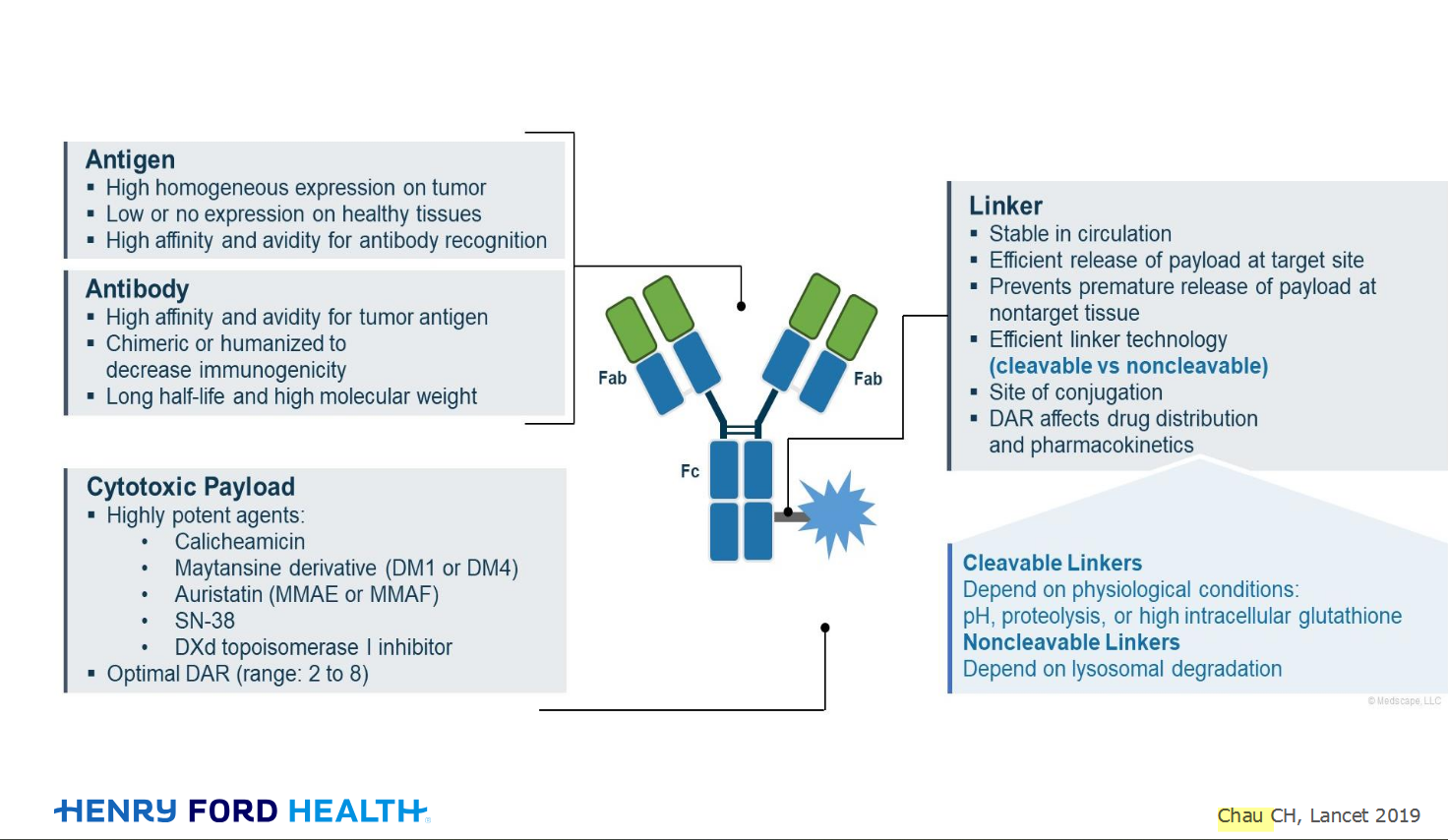
An antibody–drug conjugate (ADC) works a bit like a Trojan horse. It has three main components:
Bispecifics, or bispecific antibodies, are advanced immunotherapy drugs engineered to have two binding sites, allowing them to latch onto two different targets simultaneously, like a cancer cell and a T-cell, effectively...
The prefix “oligo–” means few. Oligometastatic (at diagnosis) Oligoprogression (during treatment)
There will be a discussion, “Studies in Oligometastatic NSCLC: Current Data and Definitions,” which will focus on what we...
Radiation therapy is primarily a localized treatment, meaning it precisely targets a specific tumor or area of the body, unlike systemic treatments (like chemotherapy) that affect the whole body.
The...

Welcome to the new CancerGRACE.org! Explore our fresh look and improved features—take a quick tour to see what’s new.
A Brief Tornado. I love the analogy Dr. Antonoff gave us to describe her presentation. I felt it earlier too and am looking forward to going back for deeper dive.