Welcome!
Welcome to the new CancerGRACE.org! Explore our fresh look and improved features—take a quick tour to see what’s new.



Displaying Results 91 - 105 of 110
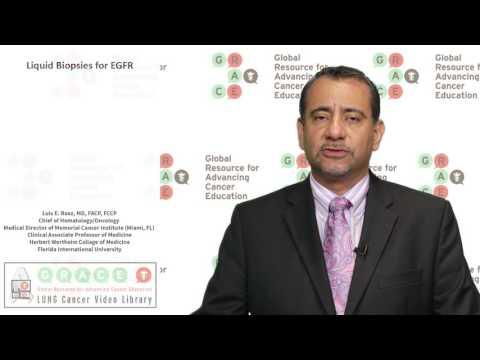
Dr. Luis Raez, MD FACP FCCP, Chief of Hem/Onc and Med. Dir. at Memorial Cancer Institute, and Clinical Associate Prof. of Medicine at FL International University discusses Liquid Biopsies for EGFR.

For our 16th video in the GRACE Spanish Lung Cancer Library, Brian Hunis, MD joined GRACE to discuss ALK rearrangements, what they are who has them.
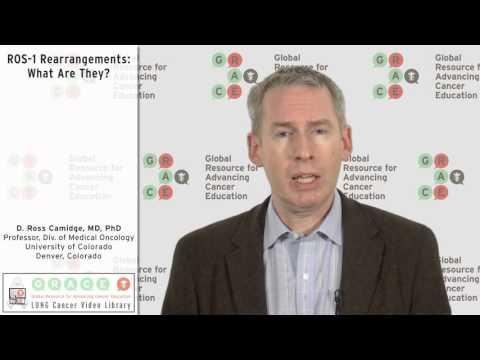
Dr. Ross Camidge, University of Colorado, describes ROS-1 rearrangements and compares them to ALK rearrangements in frequency of occurrence and response to treatment.
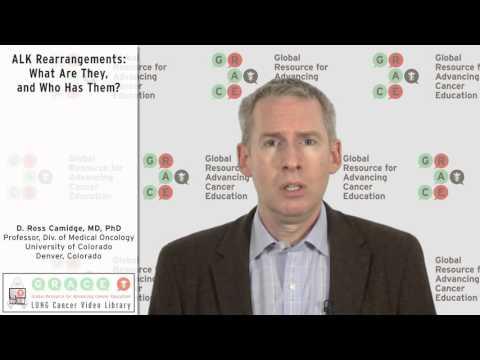
Dr. Ross Camidge, University of Colorado, describes ALK rearrangements and the characteristics of patients who most often have them.
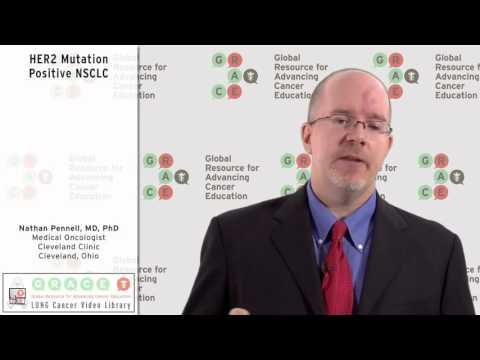
Dr. Nathan Pennell, Cleveland Clinic, describes treatment of NSCLC patients with HER2 mutations using agents such as Gilotrif or Herceptin.
Dr. Nathan Pennell, Cleveland Clinic, discusses acquired resistance to Xalkori in ALK-positive patients, and second generation inhibitors designed to overcome that resistance, such as Zykadia and alectinib.
Dr. Mark Socinski, University of Pittsburgh Medical Center, discusses the benefits of giving two additional cycles of chemotherapy in combination with radiotherapy for stage III NSCLC.
Dr. Mark Socinski, University of Pittsburgh Medical Center, describes strategies for treatment of the elderly and frail patient with locally advanced NSCLC.
Dr. Mark Socinski, University of Pittsburgh Medical Center, compares the use of chemotherapy to chemo/radiation in the preoperative setting in stage IIIA lung cancer.

Dr. Mark Socinski, University of Pittsburgh Medical Center, defines the three compartments in stage III (locally advanced) NSCLC, each of which must be treated.
Dr. Mark Socinski, University of Pittsburgh Medical Center, describes the different types of stage III (locally advanced) NSCLC, and states which of these types tend to be resectable.
Dr. Jeffrey Bradley, Radiation Oncologist at Washington University in St. Louis, defines the V20 standard for lung radiation and outlines the advantages of limiting dose and field size in lung radiation therapy.
Dr. Jeffrey Bradley, Radiation Oncologist at Washington University in St. Louis, provides trial evidence showing that patients may not benefit from high dose chest radiation therapy vs. standard dose therapy.

Dr. Jeffrey Bradley, Radiation Oncologist at Washington University in St. Louis, defines oligometastatic lung cancer and describes the recent trend toward the use of stereotactic body radiation therapy to treat it.
Dr. Jeffrey Bradley, Radiation Oncologist at Washington University in St. Louis, describes the history and current use of stereotactic radiation therapy for inoperable lung lesions.Dr. Jeffrey Bradley, Radiation Oncologist at Washington University in St. Louis, describes the history and current use

Welcome to the new CancerGRACE.org! Explore our fresh look and improved features—take a quick tour to see what’s new.