
Welcome!
Welcome to the new CancerGRACE.org! Explore our fresh look and improved features—take a quick tour to see what’s new.




Dr. Jack West is a medical oncologist and thoracic oncology specialist who is the Founder and previously served as President & CEO, currently a member of the Board of Directors of the Global Resource for Advancing Cancer Education (GRACE)
As I've mentioned in some prior posts, there is increasing recognition that lung cancer in never-smokers may be a different disease. Some of this has been defined by working backward from treatment results, where we've seen that never-smokers are consistently among the greatest beneficiaries of EGFR inhibitor therapies like Iressa or Tarceva. But there are some general principles and recurring themes with regard to the genetics of lung cancer in never-smokers.
In most cases, lung cancer develops from an accumulation of mutations in a cell over many years, even decades. A multitude of problems in the cell control mechanisms need to go awry before a cancer can grow rapidly and independently of inhibitory signals, while still having a blood supply and getting waste removed. The checks and balances within the cell are so complex that it often takes more than 10 or even 20 mutations in the same cell before it reaches the "critical mass" to become a cancer cell. For lung cancer, most of these mutations are induced by tobacco smoke. Because of these trends, lung cancer is a disease more common with advancing age, with a median age now for initial presentation of about 70 years.
In contrast, never-smokers appear to develop cancer not from an accumulation of multiple mutations that aggregate over the course of many years to eventually become a full-fledged cancer, but rather from a random few mutations that very efficiently derail the cellular control mechanisms. Therefore, tumors from never-smokers tend to have a much smaller array of problems and be "genetically simpler" (abstracts here and here).
Although it was a small study, one trial provides a good illustration by comparing "gene signatures", the genetic profiles looking at a collection of potentially relevant genes, from tumor and non-tumor lung in six smokers with lung adenocarcinoma compared with the tumor and non-tumor lung tissue from six never-smokers (abstract here). The authors found that four times as many genes were different between the lung cancer tumor and normal tissue of never-smokers compared with smokers.

(Click on image to enlarge)
This suggests that lung cancer develops out of collection of shared defects throughout the lungs in smokers (a field defect), but in never-smokers, the tumor arose due to a random event pretty much out of the blue. Another corollary of this concept is that the genetic profiles of the tumor tissue in smokers is very similar to the non-tumor lung tissue in the same person, and very different from tumor tissue in never-smokers, which is very different from non-tumor tissue in the same never-smoker. While we're talking about tissue results from just a dozen patients, these results are very intriguing and have led to larger subsequent studes that are trying to characterize genetic differences between smokers and never-smokers who develop lung cancer.
Of course, one key question is whether there are therapeutic implications here. I believe that there are, as I've described in the subject archives on never-smoker lung cancer, and/or the core concepts section just to distill down to the basics. As I mentioned above, EGFR appears to be a central part of this story, but to me the general principle is that if never-smoker lung cancer is often much more genetically simple, if we happen to hit it right we can make a very striking and prolonged input. We haven't even really begun to give a good luck at whether never-smokers may respond unusually well to standard chemo or avastin or some other novel therapy. All we know is that they are the most common MAJOR beneficiaries of EGFR inhibitors like tarceva. But the next big question is whether there are other drugs out there that can have anything close to the impact of tarceva in never-smokers. The trials dedicated to never-smokers are just starting to get off the ground.
Please feel free to offer comments and raise questions in our
discussion forums.



Dr. Singhi's reprise on appropriate treatment, "Right patient, right time, right team".
While Dr. Ryckman described radiation oncology as "the perfect blend of nerd skills and empathy".
I hope any...
My understanding of ADCs is very basic. I plan to study Dr. Rous’ discussion to broaden that understanding.
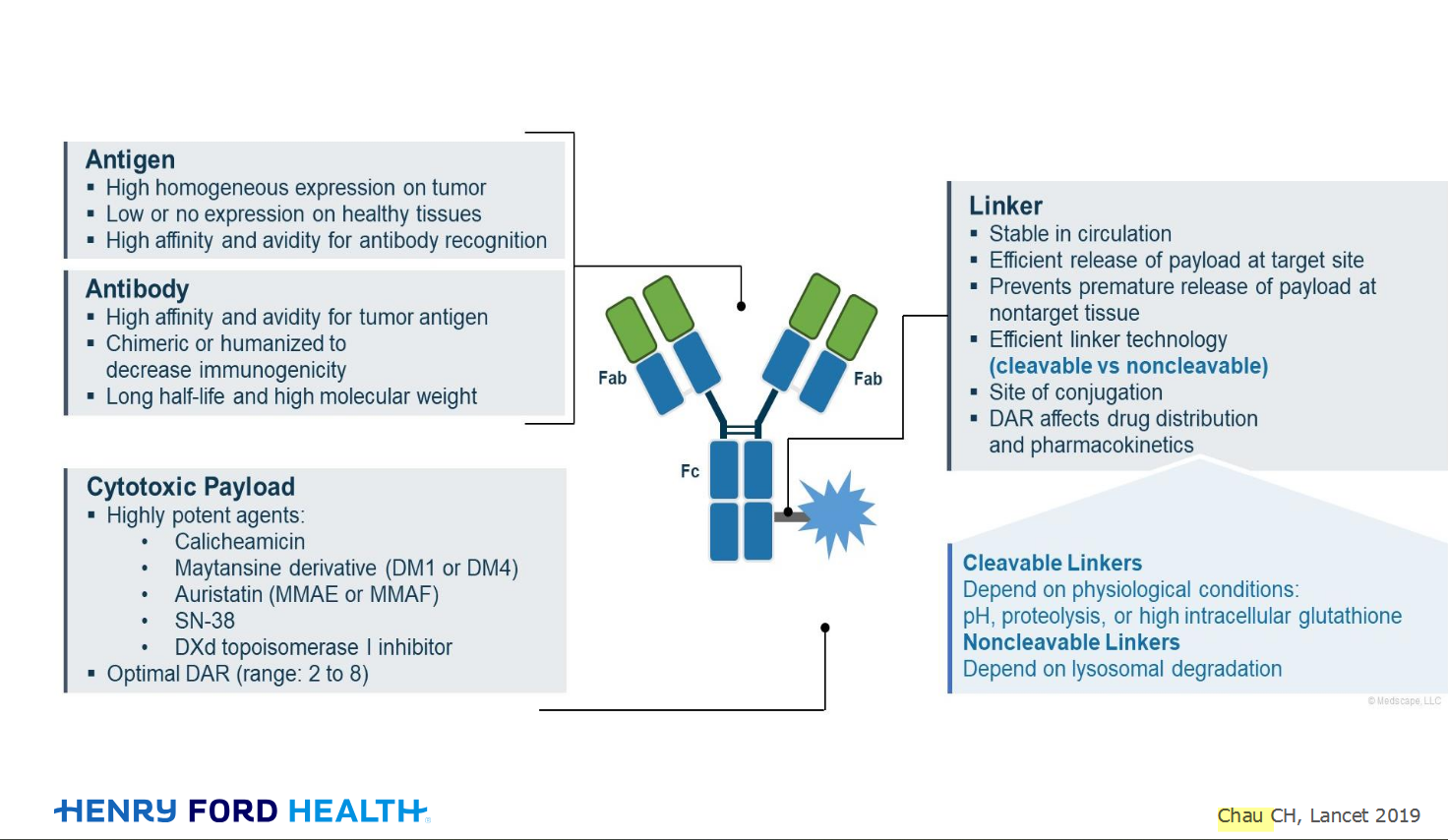
An antibody–drug conjugate (ADC) works a bit like a Trojan horse. It has three main components:
Bispecifics, or bispecific antibodies, are advanced immunotherapy drugs engineered to have two binding sites, allowing them to latch onto two different targets simultaneously, like a cancer cell and a T-cell, effectively...
The prefix “oligo–” means few. Oligometastatic (at diagnosis) Oligoprogression (during treatment)
There will be a discussion, “Studies in Oligometastatic NSCLC: Current Data and Definitions,” which will focus on what we...
Radiation therapy is primarily a localized treatment, meaning it precisely targets a specific tumor or area of the body, unlike systemic treatments (like chemotherapy) that affect the whole body.
The...

Welcome to the new CancerGRACE.org! Explore our fresh look and improved features—take a quick tour to see what’s new.
A Brief Tornado. I love the analogy Dr. Antonoff gave us to describe her presentation. I felt it earlier too and am looking forward to going back for deeper dive.