
Welcome!
Welcome to the new CancerGRACE.org! Explore our fresh look and improved features—take a quick tour to see what’s new.


Transcript
The next question that I’m often asked is: when a patient has a central tumor, a tumor that’s down the central airway to the lung at the base of the lung, historically that would require one to take the entire lung out or do a pneumonectomy. What we’ve realized is that when you do that, you may take that area with the mass out, but you’re also taking out a significant amount of normal lung and causing a good bit of morbidity to that patient. So we have found that if the tumor is only locally invasive to the central airway, you can cut that airway above and below where the mass is and sew the other parts of the lung back together and actually save the remainder of the lung and I probably do 20 or more of these a year, I’m one of the busier surgeons in the country that does sleeve resections, and they’re really, really useful.
Generally when the patient has a tumor that has grown out of one of their airways, that part of the lung is not functioning. If that’s all that we take out, then we actually leave them all of their functional lung, and the sleeve resections have been very helpful in patients who might otherwise be considered marginal for surgery. If you’re not taking anything out that’s functioning, you can actually take them though the operation very safely.
It does require them to participate in their care more than some of the other surgical procedures, and what I mean by that is that I tell all my patients after the sleeve, on the area where I’ve sewn the two pipes or the airways back together, secretions like to stick there, and so after surgery they have to get up, move around, cough, and deep breathe so that they can keep those areas open. Otherwise, their post-operative care is pretty much the same as any other patient, and their recuperation is very similar as well. I have found this to be quite useful in helping patients remove large tumors that are central then, but you can salvage a lot of the other airway. I generally draw pictures to display this so they can see exactly what part of the lung we’re taking out and what part that we’re sewing back together.
Please feel free to offer comments and raise questions in our
discussion forums.



Hi app.92, Welcome to Grace. I'm sorry this is late getting to you. And more sorry your mum is going through this. It's possible this isn't a pancoast tumor even though...
A Brief Tornado. I love the analogy Dr. Antonoff gave us to describe her presentation. I felt it earlier too and am looking forward to going back for deeper dive.
Dr. Singhi's reprise on appropriate treatment, "Right patient, right time, right team".
While Dr. Ryckman described radiation oncology as "the perfect blend of nerd skills and empathy".
I hope any...
My understanding of ADCs is very basic. I plan to study Dr. Rous’ discussion to broaden that understanding.
Here's the webinar on YouTube. It begins with the agenda. Note the link is a playlist, which will be populated with shorts from the webinar on specific topics
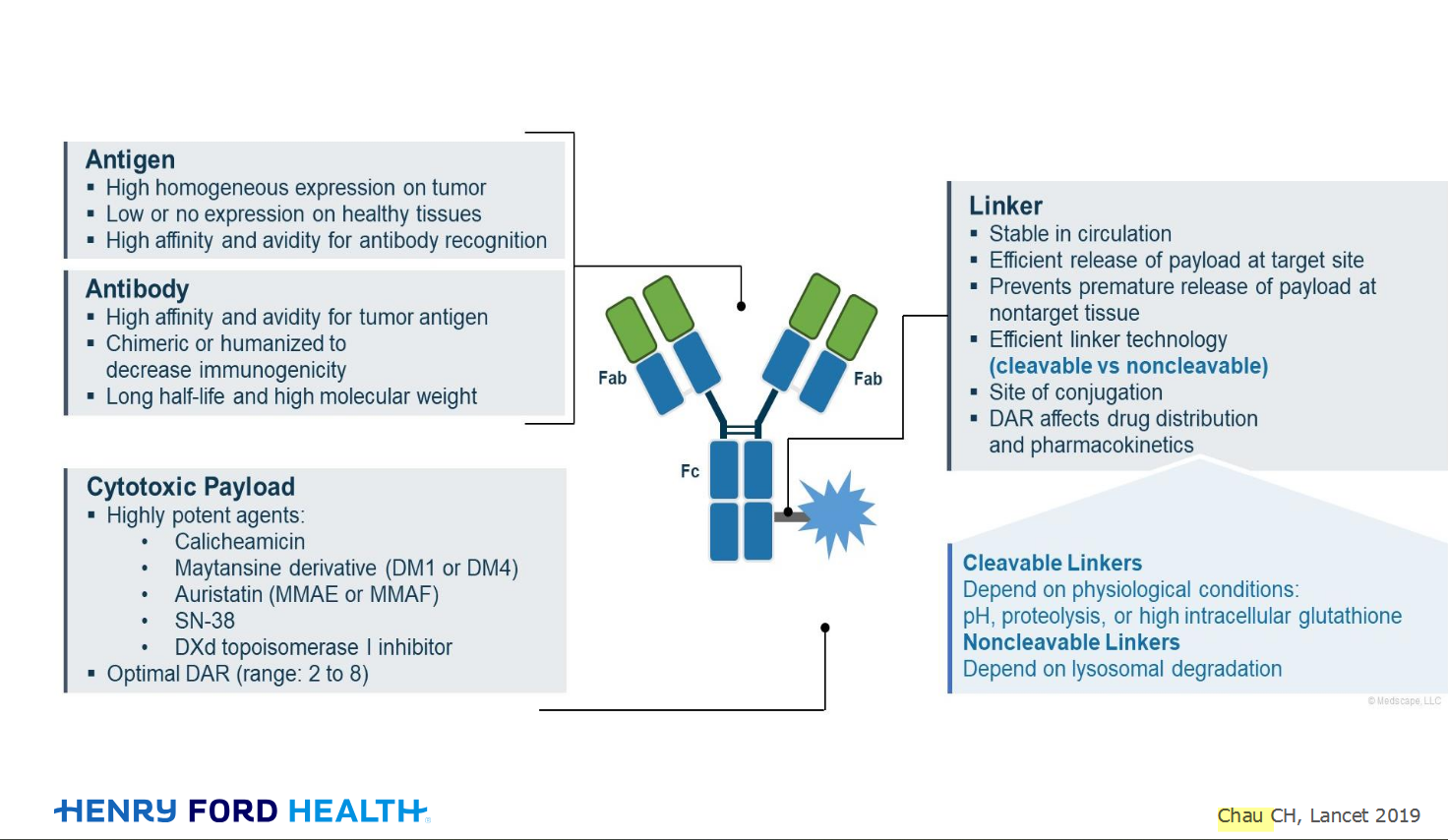
An antibody–drug conjugate (ADC) works a bit like a Trojan horse. It has three main components:

Welcome to the new CancerGRACE.org! Explore our fresh look and improved features—take a quick tour to see what’s new.