
Welcome!
Welcome to the new CancerGRACE.org! Explore our fresh look and improved features—take a quick tour to see what’s new.




Dr. Jack West is a medical oncologist and thoracic oncology specialist who is the Founder and previously served as President & CEO, currently a member of the Board of Directors of the Global Resource for Advancing Cancer Education (GRACE)
It's been a while since we released another podcast from the recording I did with Drs. Jyoti Patel from Northwestern and Bob Doebele from University of Colorado earlier this year. In that session, we covered a series of real life scenarios in managing lung cancer that are at the outer limits of what we can say we know and leave us relying more on our best judgment than on evidence. Along with the comments by Drs. Patel and Doebele, we've then added responses from a collection of additional great lung cancer experts (Drs. Suresh Ramalingam, Jonathan Goldman, Julie Brahmer, Heather Wakelee, and Karen Reckamp) when presented with the same case. Here, you can see the convergence of principles but also how we sometimes struggle in our varied recommendations.
Here is a podcast of an important topic that comes up here all too often: What do we do for a patient with advanced NSCLC and a known EGFR mutation who has responded very well and for a long time to an EGFR tyrosine kinase inhibitor (TKI), but now demonstrates rather slow but clear progression compared to their best response? Should we continue on the EGFR TKI without any changes for a while? When we decide a change is needed, how do we approach that? Do we stop the EGFR TKI temporarily or for good, or do we continue it and add a chemotherapy-based regimen in addition? And when we reach a point of clear acquired resistance, how valuable is it to do a repeat biopsy? Is this just an arguably a nice thing to consider or an approach that the experts would clearly pursue?
Below you'll find the audio and video versions of the podcast, as well as the transcript and figures (in truth, this isn't a very video-oriented presentation, so you won't miss much by concentrating on the audio and/or the transcript only):
grace-cases-acquired-resistance-to-EGFR-TKI-audio-podcast
grace-cases-acquired-resistance-to-egfr-tki-transcript
grace-cases-acquired-resistance-to-egfr-tki-figures
Folks interested in this topic may also want to check the podcasts from our discussions/webinar with Dr. Lecia Sequist, of Massachusetts General Hospital, who spoke with us earlier about what we know and are still learning about acquired resistance to EGFR TKIs and also her follow-up discussion of the potential insights we might glean from repeat biopsies in this setting.
Thanks to all of our wonderful participants in these case discussions, and to LUNGevity Foundation for partnering with us in supporting this series.
Please feel free to offer comments and raise questions in our
discussion forums.
Hi app.92, Welcome to Grace. I'm sorry this is late getting to you. And more sorry your mum is going through this. It's possible this isn't a pancoast tumor even though...
A Brief Tornado. I love the analogy Dr. Antonoff gave us to describe her presentation. I felt it earlier too and am looking forward to going back for deeper dive.
Dr. Singhi's reprise on appropriate treatment, "Right patient, right time, right team".
While Dr. Ryckman described radiation oncology as "the perfect blend of nerd skills and empathy".
I hope any...
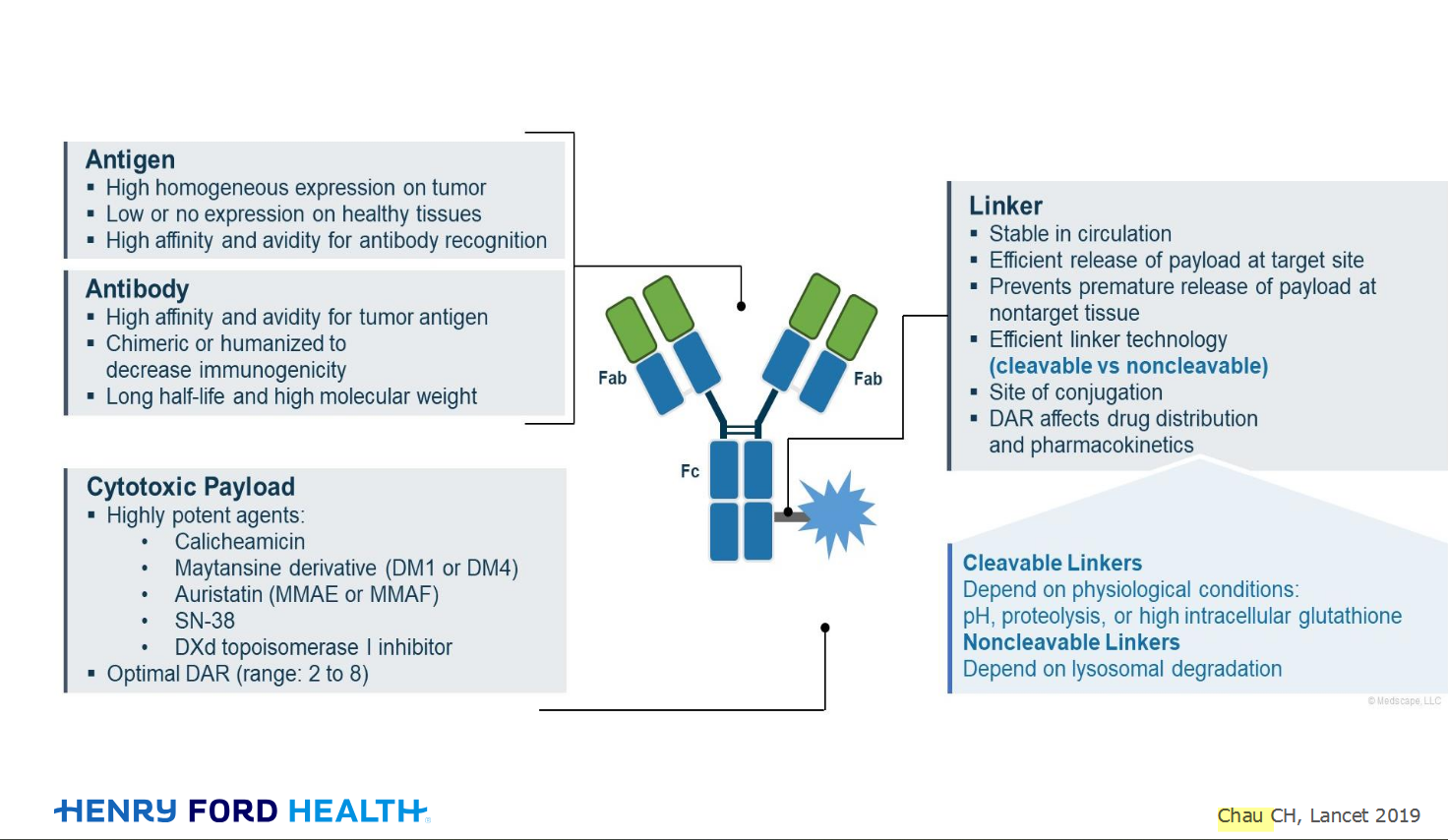
My understanding of ADCs is very basic. I plan to study Dr. Rous’ discussion to broaden that understanding.
Here's the webinar on YouTube. It begins with the agenda. Note the link is a playlist, which will be populated with shorts from the webinar on specific topics
An antibody–drug conjugate (ADC) works a bit like a Trojan horse. It has three main components:

Welcome to the new CancerGRACE.org! Explore our fresh look and improved features—take a quick tour to see what’s new.