Welcome!
Welcome to the new CancerGRACE.org! Explore our fresh look and improved features—take a quick tour to see what’s new.



Displaying Results 91 - 105 of 117
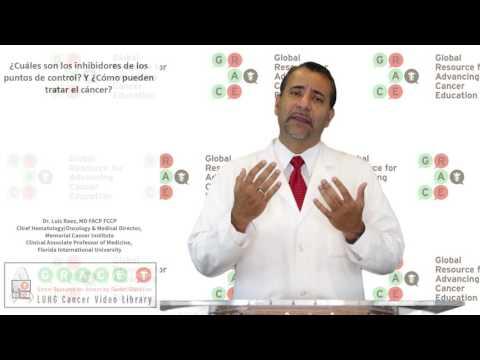
Dr. Luis Raez, MD FACP FCCP, Chief of Hematology/Oncology and Med. Director at Memorial Cancer Institute, and Clinical Associate Professor of Medicine at FL International University joined GRACE to discuss immune checkpoint inhibitors and how they can treat cancer.
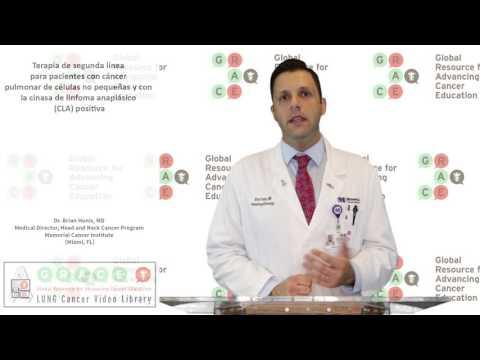
For our 19th video in the GRACE Spanish Lung Cancer Library, Dr. Brian Hunis, joined GRACE to discuss the basics of Lung Cancer for Spanish-speaking patients and caregivers. In this video Dr. Hunis discusses second line therapy for NSCLC patients who are ALK positive.
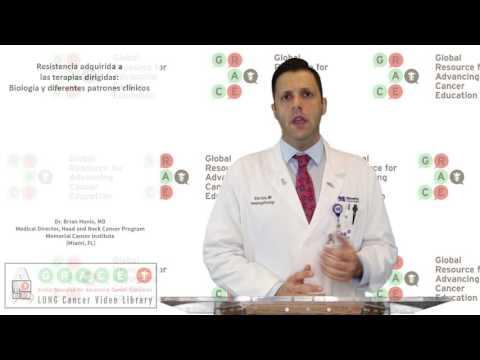
For our 18th video in the GRACE Spanish Lung Cancer Library, Brian Hunis, MD joined GRACE to discuss acquired resistance to targeted therapies: biology and different clinical patterns.
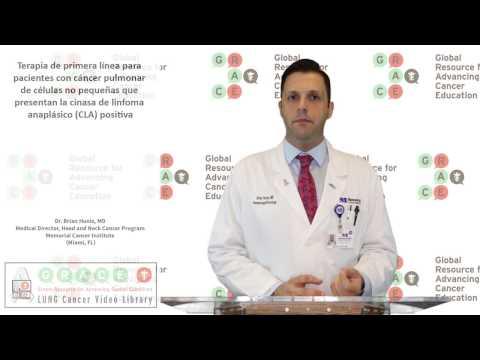
For our 17th video in the GRACE Spanish Lung Cancer Library, Brian Hunis, MD joined GRACE to discuss first line therapy for NSCLC patients that have anaplastic lymphoma kinase (ALK) positive.
For our 7th video in the GRACE Spanish Lung Cancer Library, Antonio Calles, MD joined GRACE to discuss the best treatment for frail patients with advanced NSCLC.
For our 5th video in the GRACE Spanish Lung Cancer Library, Antonio Calles, MD joined GRACE to discuss the most appropriate treatment for elderly patients with advanced NSCLC, and whether age alters the recommendations.
Dr. Jack West, Swedish Cancer Institute, compares the mechanism of action, efficacy and toxicity of PD-1 and PD-L1 inhibitors.

Dr. Ross Camidge, University of Colorado, addresses the question of whether to use a second generation ALK inhibitor as first line therapy or only after acquired resistance to crizotinib.
Dr. Ross Camidge, University of Colorado, discusses management of CNS progression for ALK-positive NSCLC including monitoring frequency and preferences between systemic and radiation therapy.
Dr. Ross Camidge, University of Colorado, explains the preference for crizotinib rather than platinum doublet chemotherapy as first line treatment for patients with ALK or ROS1 rearrangements.

Transcript One of the important points about patients with advanced lung cancer is that 30-40% of patients will develop bone metastases. I think it’s important to recognize this is not bone cancer, this is lung cancer that’s moved to the bone, and in 30-40% of patients at some point who have
Dr. Nasser Hanna, Indiana University Health, addresses the issue of prophylactic cranial irradiation (PCI) in locally advanced NSCLC.
Dr. Jared Weiss, UNC Lineberger Comprehensive Cancer Center, describes the types of situations in which local therapy is appropriate for treating limited acquired resistance.
Dr. Jared Weiss, UNC Lineberger Comprehensive Cancer Center, discusses the use of single agent vs. doublet chemotherapy in elderly patients.
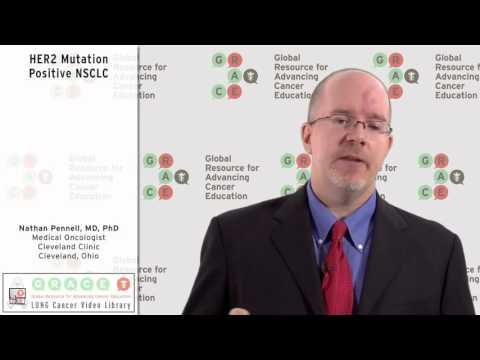
Dr. Nathan Pennell, Cleveland Clinic, describes treatment of NSCLC patients with HER2 mutations using agents such as Gilotrif or Herceptin.

Welcome to the new CancerGRACE.org! Explore our fresh look and improved features—take a quick tour to see what’s new.