Welcome!
Welcome to the new CancerGRACE.org! Explore our fresh look and improved features—take a quick tour to see what’s new.



Displaying Results 31 - 45 of 47
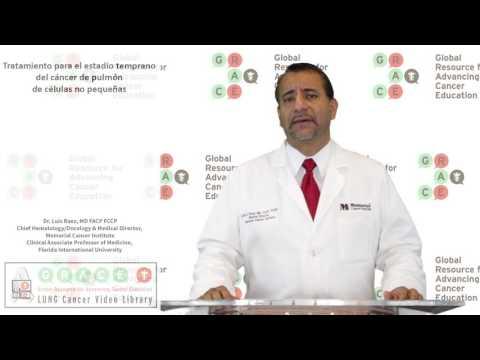
Dr. Luis Raez, MD FACP FCCP, Chief of Hematology/Oncology and Medical Director at Memorial Cancer Institute, and Clinical Associate Professor of Medicine at Florida International University joined GRACE to discuss treating early stage NSCLC.
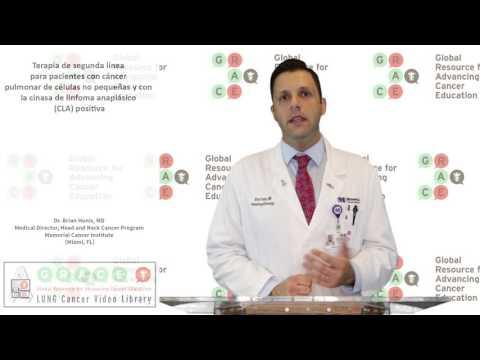
For our 19th video in the GRACE Spanish Lung Cancer Library, Dr. Brian Hunis, joined GRACE to discuss the basics of Lung Cancer for Spanish-speaking patients and caregivers. In this video Dr. Hunis discusses second line therapy for NSCLC patients who are ALK positive.
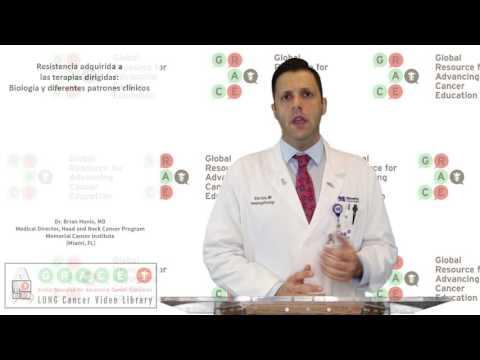
For our 18th video in the GRACE Spanish Lung Cancer Library, Brian Hunis, MD joined GRACE to discuss acquired resistance to targeted therapies: biology and different clinical patterns.
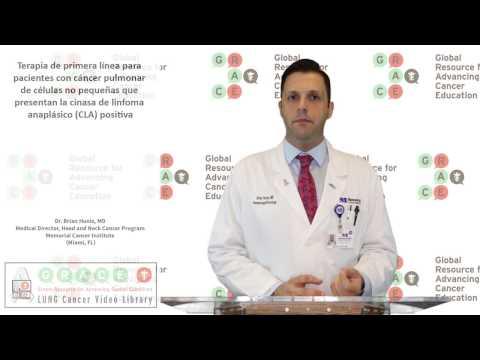
For our 17th video in the GRACE Spanish Lung Cancer Library, Brian Hunis, MD joined GRACE to discuss first line therapy for NSCLC patients that have anaplastic lymphoma kinase (ALK) positive.
All of us at the Global Resource for Advancing Cancer Education are very excited to introduce our newest project - the GRACE Spanish Lung Cancer Library. This collection of videos with our Spanish speaking faculty will discuss the basics of lung cancer for Spanish speaking patients and caregivers
Dr. Rachel Sanborn, Providence Thoracic Oncology Program, discusses the reasons behind using adjuvant chemotherapy for early stage NSCLC patients. Clinical studies have shown that adding chemotherapy after surgery for lung cancer can indeed improve survival. Adjuvant Chemotherapy for Early Stage

Dr. Ross Camidge, University of Colorado, addresses the question of whether to use a second generation ALK inhibitor as first line therapy or only after acquired resistance to crizotinib.
Dr. Ross Camidge, University of Colorado, discusses management of CNS progression for ALK-positive NSCLC including monitoring frequency and preferences between systemic and radiation therapy.
Dr. Ross Camidge, University of Colorado, explains the preference for crizotinib rather than platinum doublet chemotherapy as first line treatment for patients with ALK or ROS1 rearrangements.
Dr. Heather Wakelee, Stanford University Medical Center, evaluates the lack of evidence for the use of targeted therapies after surgery, and describes ongoing trials attempting to resolve that issue.
Dr. Heather Wakelee, Stanford University Medical Center, lists standard adjuvant chemotherapy regimens, comparing their administration and uses.
Transcript Historically, lung cancer has been treated with a large incision between the ribs, and in the early-mid ‘90s we began to investigate uses of the laparoscope, which was used to do gallbladders and so forth, in the chest. So we began using the devices to do more limited resections with this
Dr. David Harpole, Duke University Medical Center, describes how he assists patients with the surgical decision-making process.
Dr. Jared Weiss, UNC Lineberger Comprehensive Cancer Center, describes the types of situations in which local therapy is appropriate for treating limited acquired resistance.
Dr. Nathan Pennell, Cleveland Clinic, discusses acquired resistance to Xalkori in ALK-positive patients, and second generation inhibitors designed to overcome that resistance, such as Zykadia and alectinib.

Welcome to the new CancerGRACE.org! Explore our fresh look and improved features—take a quick tour to see what’s new.