
Welcome!
Welcome to the new CancerGRACE.org! Explore our fresh look and improved features—take a quick tour to see what’s new.


Dr. Jack West is a medical oncologist and thoracic oncology specialist who is the Founder and previously served as President & CEO, currently a member of the Board of Directors of the Global Resource for Advancing Cancer Education (GRACE)
 I'm happy to bring you now the second part of the Santa Monica webinar, developed with the LUNGevity Foundation, on "Molecular Markers in Advanced NSCLC: Who to Test and What to Test For?", in which I was joined by Drs. Charles Rudin (Johns Hopkins University in Balimore, MD), Alice Shaw (Massachusetts General Hospital in Boston, MA), David Spigel (Sarah Cannon Cancer Center in Nashville, TN), and Glen Gloss (University of Ottawa in Ontario, Canada).
In this short podcast, Dr. Alice Shaw reviewed the frequencies of different molecular markers in advanced NSCLC as a function of patient sex, smoking status, race, and tumor histology. This work is very interesting, of course, because if we only do molecular marker studies of people with an adenocarcinoma or never-smokers, we not only won't ever find potentially relevant mutations in people with other histologies and those with a smoking history, but we won't have any good idea of the probabilities of finding them either.
Here is the podcast in audio and video formats, as well as the transcript and figures.
Molecular Markers SM Pt 2 Shaw on Markers by Clin Factors Audio Podcast
Molecular Markers SM Pt 2 Shaw on Markers by Clin Factors Transcript
Molecular Markers SM Pt 2 Shaw on Markers by Clin Factors Figs
I certainly found her presentation interesting, particularly since it highlighted some potentially fruitful targets in squamous cell carcinoma, such an underserved cancer population overdue for new treatments.
Please feel free to offer comments and raise questions in our
discussion forums.
Hi app.92, Welcome to Grace. I'm sorry this is late getting to you. And more sorry your mum is going through this. It's possible this isn't a pancoast tumor even though...
A Brief Tornado. I love the analogy Dr. Antonoff gave us to describe her presentation. I felt it earlier too and am looking forward to going back for deeper dive.
Dr. Singhi's reprise on appropriate treatment, "Right patient, right time, right team".
While Dr. Ryckman described radiation oncology as "the perfect blend of nerd skills and empathy".
I hope any...
My understanding of ADCs is very basic. I plan to study Dr. Rous’ discussion to broaden that understanding.
Here's the webinar on YouTube. It begins with the agenda. Note the link is a playlist, which will be populated with shorts from the webinar on specific topics
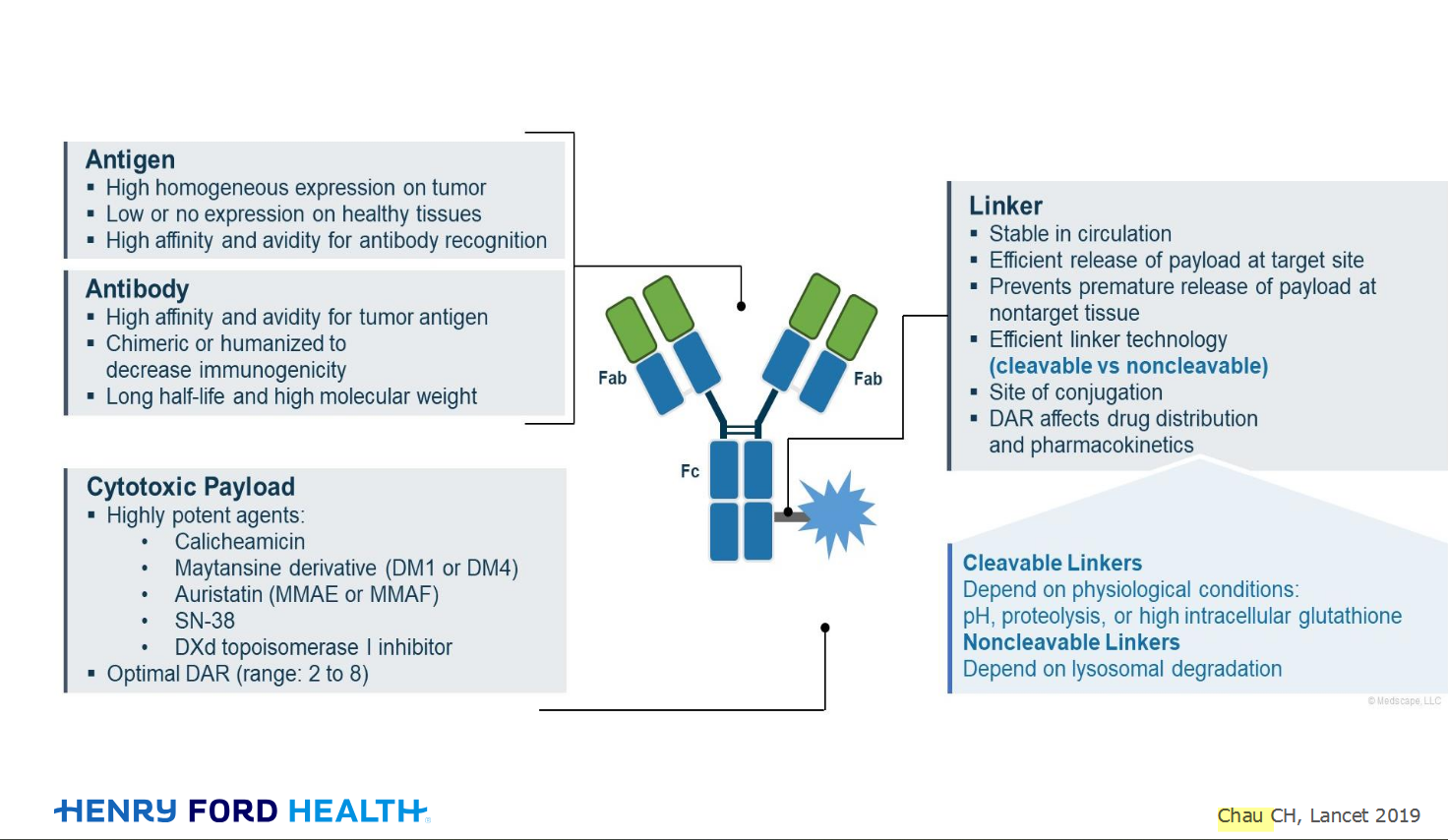
An antibody–drug conjugate (ADC) works a bit like a Trojan horse. It has three main components:

Welcome to the new CancerGRACE.org! Explore our fresh look and improved features—take a quick tour to see what’s new.