
Welcome!
Welcome to the new CancerGRACE.org! Explore our fresh look and improved features—take a quick tour to see what’s new.


Dr. Cathy Pietanza from Memorial Sloan Kettering Cancer Center reviews early trial data of immunotherapy agents for treatment of small cell lung cancer (SCLC).
Transcript
There has been a lot of excitement with immunotherapy in non-small cell lung cancer — nivolumab was recently approved for the treatment, in the third line setting, for squamous cell lung cancer, and has received NCCN designation to be used in adenocarcinoma. These treatments, as I said, target the immune system, and the way that I like to explain it is that, currently, the cancer is able to decrease the amount that the immune system works against it, and by using immune therapy inhibitors, the proteins and the two systems become disconnected, so that way the immune system can really attack the cancer.
In June of 2015, at our annual clinical oncology conference, we saw data for two agents – one was nivolumab, and that clinical trial was very early phase, it was only a phase one, it was really only looking to see if there was safety. There were two arms to that study — one arm received nivolumab by itself, which is one inhibitor against the immune system, and the other used nivolumab with ipilimumab. Ipilimumab is another type of inhibitor against the immune system. It’s believed that, maybe, two inhibitors may work better than one alone, and both arms showed that there was a very nice response rate to these drugs in small cell lung cancer, and that the patients who did respond had a long-term response duration. And, so, these are being evaluated in newer trials. In fact, there’s a maintenance trial that’s planned to start opening in January 2016 or so, that will be looking at immune therapies in the maintenance setting, which is something that’s never really been explored in small cell lung cancer — that’s if we use a drug after first line chemotherapy. The trial is going to be a placebo controlled trial, so patients will be on one of three arms: either placebo, or nivolumab, or nivolumab with ipilimumab.
In June of 2015, also at our large clinical oncology conference, pembrolizumab, another immune therapy inhibitor, was also shown to be beneficial in patients with small cell lung cancer. There are several trials planned with this drug, also, in the maintenance setting, and in the second line setting. So, second line would be, again, after first line chemotherapy, when the disease recurs; the trial that’s expected to open there is a trial of pembrolizumab, versus the standard, topotecan.
Please feel free to offer comments and raise questions in our
discussion forums.

Hi app.92, Welcome to Grace. I'm sorry this is late getting to you. And more sorry your mum is going through this. It's possible this isn't a pancoast tumor even though...
A Brief Tornado. I love the analogy Dr. Antonoff gave us to describe her presentation. I felt it earlier too and am looking forward to going back for deeper dive.
Dr. Singhi's reprise on appropriate treatment, "Right patient, right time, right team".
While Dr. Ryckman described radiation oncology as "the perfect blend of nerd skills and empathy".
I hope any...
My understanding of ADCs is very basic. I plan to study Dr. Rous’ discussion to broaden that understanding.
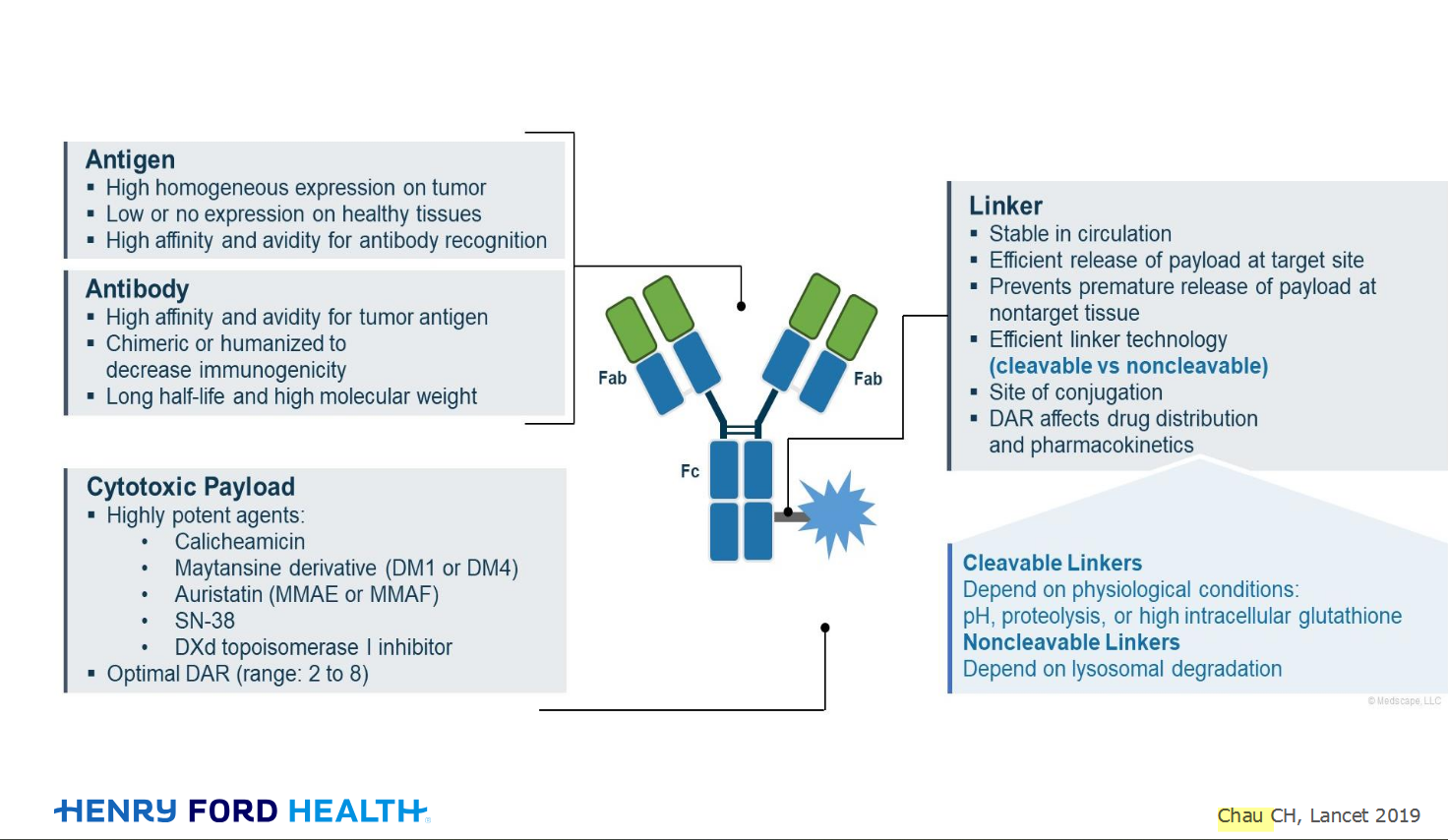
Here's the webinar on YouTube. It begins with the agenda. Note the link is a playlist, which will be populated with shorts from the webinar on specific topics
An antibody–drug conjugate (ADC) works a bit like a Trojan horse. It has three main components:

Welcome to the new CancerGRACE.org! Explore our fresh look and improved features—take a quick tour to see what’s new.