
Welcome!
Welcome to the new CancerGRACE.org! Explore our fresh look and improved features—take a quick tour to see what’s new.



Drs. Ben Solomon, Leora Horn, & Jack West discuss highlights of a French randomized trial that demonstrated a significant survival benefit from addition of Avastin (bevacizumab) to cisplatin/Alimta in patients with malignant pleural mesothelioma.
[powerpress]
[ratingwidget post_id=0]
Please feel free to offer comments and raise questions in our Discussion Forums.
Transcript
Dr. West: So, one of the other topics that’s covered in this broad thoracic malignancies conference is mesothelioma, where one of the biggest bits of news that we got this year actually came at ASCO, earlier this year, in a French trial that showed that adding Avastin (bevacizumab) to standard chemotherapy, in this case, cisplatin and Alimta (pemetrexed), seemed to improve survival in a clinically significant way. What do you think of these data — is this changing practice for you or around you, Ben?
Dr. Solomon: Sure, look, I think it’s an important study — the initial study that showed benefit of cisplatin and pemetrexed, over cisplatin alone, was the first phase three study that showed a survival benefit in mesothelioma. This is the second study, and I think the benefits are meaningful. There was an improvement in progression-free survival of about two months — the improvement in overall survival was a bit more than that. So, I do think that that difference is meaningful, and I think it’s likely that bevacizumab, in that context, will get incorporated into standard practice.
Dr. West: What do you say?
Dr. Horn: I think that is possible — what I worry is that pemetrexed and bevacizumab together is a more toxic combination, and it is not as easy and as tolerable as pemetrexed alone, but for those patients who can tolerate it, it is a good, new treatment option for them.
Dr. West: So it’s not something you’re uniformly inclined to incorporate for most or all of your patients with mesothelioma?
Dr. Horn: It’s such a rare disease, so not right now. What I also worry about is a lot of the mesothelioma patients are older, and, so, that same worry about tolerability.
Please feel free to offer comments and raise questions in our
discussion forums.
Hi app.92, Welcome to Grace. I'm sorry this is late getting to you. And more sorry your mum is going through this. It's possible this isn't a pancoast tumor even though...
A Brief Tornado. I love the analogy Dr. Antonoff gave us to describe her presentation. I felt it earlier too and am looking forward to going back for deeper dive.
Dr. Singhi's reprise on appropriate treatment, "Right patient, right time, right team".
While Dr. Ryckman described radiation oncology as "the perfect blend of nerd skills and empathy".
I hope any...
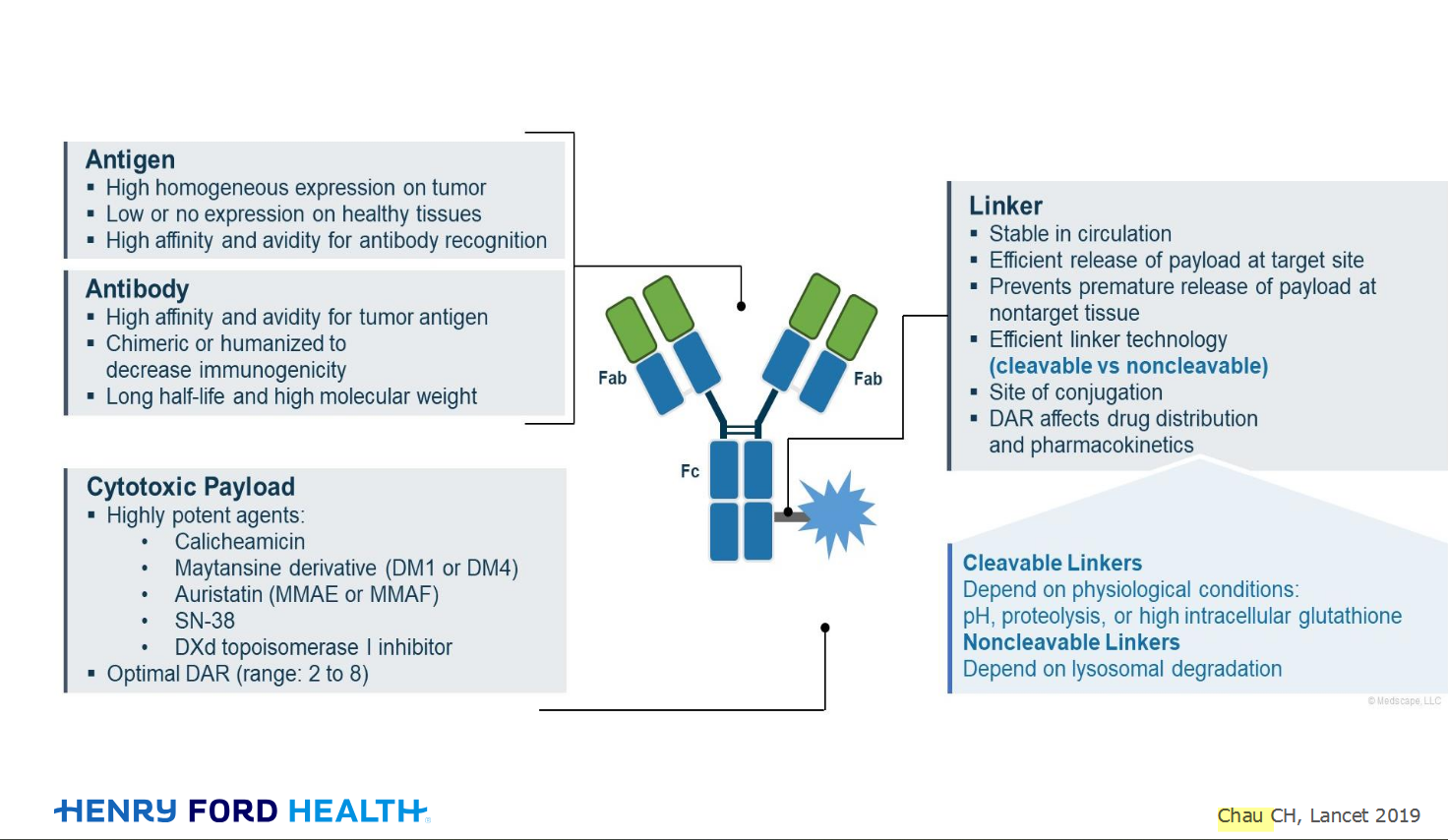
My understanding of ADCs is very basic. I plan to study Dr. Rous’ discussion to broaden that understanding.
Here's the webinar on YouTube. It begins with the agenda. Note the link is a playlist, which will be populated with shorts from the webinar on specific topics
An antibody–drug conjugate (ADC) works a bit like a Trojan horse. It has three main components:

Welcome to the new CancerGRACE.org! Explore our fresh look and improved features—take a quick tour to see what’s new.