
Welcome!
Welcome to the new CancerGRACE.org! Explore our fresh look and improved features—take a quick tour to see what’s new.


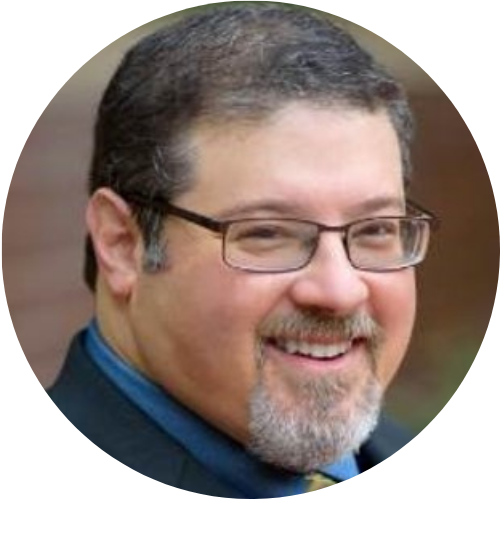
Dr. Jack West is a medical oncologist and thoracic oncology specialist who is the Founder and previously served as President & CEO, currently a member of the Board of Directors of the Global Resource for Advancing Cancer Education (GRACE)
This is the last of six podcasts produced from the two hour program we did in partnership with the LUNGevity Foundation earlier this year in Santa Monica, at the start of the "Targeted Therapies in Lung Cancer" annual meeting. This activity was comprised of some great panel discussions and brief presentations on tough but timely issues on the subject of "Molecular Markers in Advanced NSCLC: Who to Test and What to Test For?". It featured guest faculty members Dr. Charlie Rudin from Johns Hopkins University, Dr. Alice Shaw from Massachusetts General Hospital, Dr. David Spigel from Sarah Cannon Cancer Center, and Dr. Glen Goss from the University of Ottawa.
 In this last installment, Dr. Goss speaks on the topic of how to broaden the incorporation of molecular marker studies in lung cancer beyond specialty academic centers and try to implement them in wider networks. He discusses the early pilot efforts as well as the challenges, particular cost issues, but raises the possibility that smarter treatment could also prove to be more cost-effective, even adding the cost of more and better molecular diagnostic studies.
We follow his presentations with some final meaty questions about the panels views on what role physicians should play in considering costs of health care recommendations, whether we should be doing "reflex testing" automatically for all patients with advanced NSCLC (or a defined subset), and whether there's a clear role and incentive for repeat biopsies over the course of ongoing treatment.
Here are the audio and video versions of the podcast, along with transcript and figures.
Molecular Markers SM Pt 6 Goss on Markers in HC Systems Audio Podcast
Molecular Markers SM Pt 6 Goss on Markers in HC Systems Transcript
Molecular Markers SM Pt 6 Goss on Markers in HC Systems Figs
Our next podcasts will cover presentations by Drs. Ramaswamy Govindan and Julie Brahmer on Immunotherapies for Lung Cancer. There should be some news on this front from ASCO, particularly on anti-PD1 as a mechanism, so we'll work to get that content out around the time we're discussing the new information being presented at ASCO.
Please feel free to offer comments and raise questions in our
discussion forums.
Dr. Singhi's reprise on appropriate treatment, "Right patient, right time, right team".
While Dr. Ryckman described radiation oncology as "the perfect blend of nerd skills and empathy".
I hope any...
My understanding of ADCs is very basic. I plan to study Dr. Rous’ discussion to broaden that understanding.
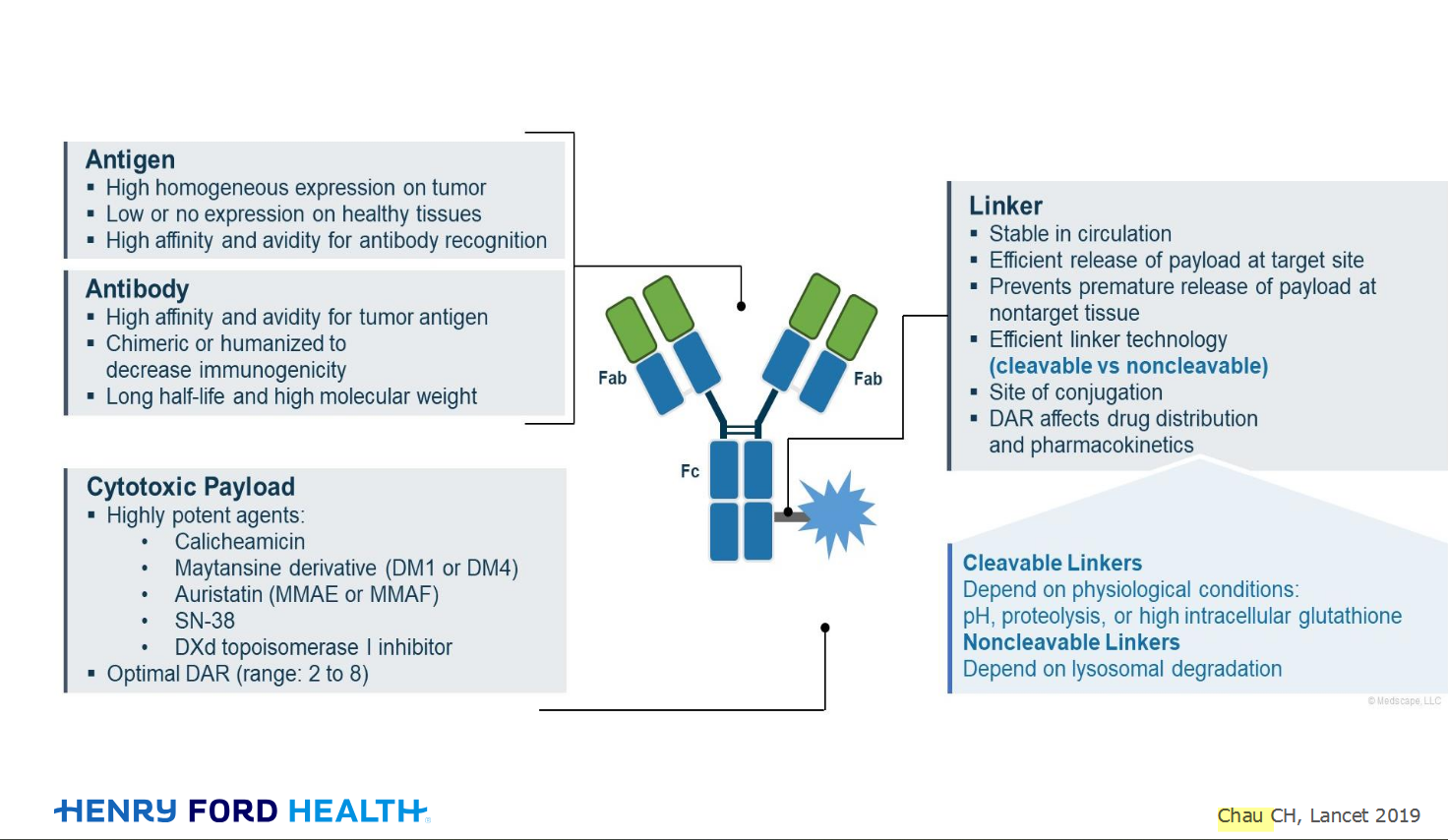
An antibody–drug conjugate (ADC) works a bit like a Trojan horse. It has three main components:
Bispecifics, or bispecific antibodies, are advanced immunotherapy drugs engineered to have two binding sites, allowing them to latch onto two different targets simultaneously, like a cancer cell and a T-cell, effectively...
The prefix “oligo–” means few. Oligometastatic (at diagnosis) Oligoprogression (during treatment)
There will be a discussion, “Studies in Oligometastatic NSCLC: Current Data and Definitions,” which will focus on what we...
Radiation therapy is primarily a localized treatment, meaning it precisely targets a specific tumor or area of the body, unlike systemic treatments (like chemotherapy) that affect the whole body.
The...

Welcome to the new CancerGRACE.org! Explore our fresh look and improved features—take a quick tour to see what’s new.
A Brief Tornado. I love the analogy Dr. Antonoff gave us to describe her presentation. I felt it earlier too and am looking forward to going back for deeper dive.