Welcome!
Welcome to the new CancerGRACE.org! Explore our fresh look and improved features—take a quick tour to see what’s new.



Displaying Results 211 - 225 of 234
Dr. Jeffrey Bradley, Radiation Oncologist at Washington University in St. Louis, defines the V20 standard for lung radiation and outlines the advantages of limiting dose and field size in lung radiation therapy.
Dr. Jeffrey Bradley, Radiation Oncologist at Washington University in St. Louis, provides trial evidence showing that patients may not benefit from high dose chest radiation therapy vs. standard dose therapy.

Dr. Jeffrey Bradley, Radiation Oncologist at Washington University in St. Louis, defines oligometastatic lung cancer and describes the recent trend toward the use of stereotactic body radiation therapy to treat it.
Dr. Jeffrey Bradley, Radiation Oncologist at Washington University in St. Louis, describes the history and current use of stereotactic radiation therapy for inoperable lung lesions.Dr. Jeffrey Bradley, Radiation Oncologist at Washington University in St. Louis, describes the history and current use
Dr. Jeffrey Bradley, Radiation Oncologist at Washington University in St. Louis, describes the use of stereotactic radiosurgery and stereotactic radiation therapy.
Dr. Jeffrey Bradley, Radiation Oncologist at Washington University in St. Louis, provides evidence for the use of stereotactic body radiation therapy as an alternative to surgery for operable early stage lung cancer.

Dr. Edward S. Kim from the Levine Cancer Institute in Charlotte, NC defines the concept of cancer histology and gives examples of several lung cancer subtypes.
Dr. Edward S. Kim from the Levine Cancer Institute in Charlotte, NC describes the use of serum tumor markers in various types of cancer, and the lack of a useful serum tumor marker in lung cancer.
Dr. Ed Kim from the Levine Cancer Institute reviews the potential advantages and current limitations of blood-based testing for molecular markers using circulating tumor cells and circulating tumor DNA in identifying clinically important mutations.
Dr. Ed Kim from the Levine Cancer Institute in Charlotte, NC summarizes the mechanism of next generation sequencing (NGS), how it can potentially be used, and its limitations in clinical practice today.
Dr. Eddie Garon considers the data on immunotherapies for first line treatment of advanced NSCLC and whether we are likely to use these agents instead of or in combination with standard chemotherapy soon.
UCLA Med Center's Dr. Eddie Garon discusses the open question of the optimal duration of ongoing treatment with immunotherapy for lung cancer.
Bronchioloalveolar carcinoma (BAC) is an unusual subtype of lung cancer; medical oncologist Dr. Jack West reviews the evidence on the best systemic therapy to treat advanced, multifocal BAC.
Dr. Jack West, medical oncologist/lung cancer specialist, describes special management considerations for indolent lung cancers that may not require treatment or are at risk for “over-treatment.”
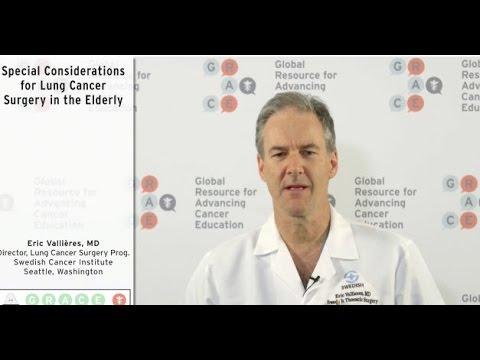
Should older patients with lung cancer undergo surgery? What issues affect the probability of an elderly patients safely undergoing lung cancer surgery. Dr. Eric Vallières, thoracic surgeon, provides an expert perspective. Please feel free to offer comments and raise questions in our Discussion

Welcome to the new CancerGRACE.org! Explore our fresh look and improved features—take a quick tour to see what’s new.