
Welcome!
Welcome to the new CancerGRACE.org! Explore our fresh look and improved features—take a quick tour to see what’s new.



Dr. Jack West is a medical oncologist and thoracic oncology specialist who is the Founder and previously served as President & CEO, currently a member of the Board of Directors of the Global Resource for Advancing Cancer Education (GRACE)
Here's a webinar case discussion I did with Drs. Julie Brahmer from Johns Hopkins in Baltimore, and Greg Riely from Memorial Sloan Kettering Cancer Center in New York. They're great thoracic oncologists as wellas friends, and they were kind enough to join me for discussion of several complex cases that don't have clear answers and illustrate the reality that even when we know the evidence, there's plenty of room for judgment.
Our first case is about a 63 year-old woman who has a poorly differentiated NSCLC that is just outside of the range we'd feel feasible for radiating, and it brings up issues related to trying to integrate chemo and possible radiation, the debatable role of agents like Avastin (bevacizumab) and Alimta (pemetrexed) for cancers that are hard to classify, and then how we approach managing patients who have responded well -- observation or maintenance?
Here is the audio and video versions of the podcast, along with the associated transcript and figures.
[powerpress]
rt-brahmer-riely-webinar-case-1-audio-podcast
rt-brahmer-riely-webinar-case-1-transcript
rt-brahmer-riely-webinar-case-1-figures
My thanks go out again to Drs. Brahmer and Riely for their time and thoughtful comments. You'll hear more from them about a couple of additional cases in the next few weeks.
Please feel free to offer comments and raise questions in our
discussion forums.
A Brief Tornado. I love the analogy Dr. Antonoff gave us to describe her presentation. I felt it earlier too and am looking forward to going back for deeper dive.
Dr. Singhi's reprise on appropriate treatment, "Right patient, right time, right team".
While Dr. Ryckman described radiation oncology as "the perfect blend of nerd skills and empathy".
I hope any...
My understanding of ADCs is very basic. I plan to study Dr. Rous’ discussion to broaden that understanding.
Here's the webinar on YouTube. It begins with the agenda. Note the link is a playlist, which will be populated with shorts from the webinar on specific topics
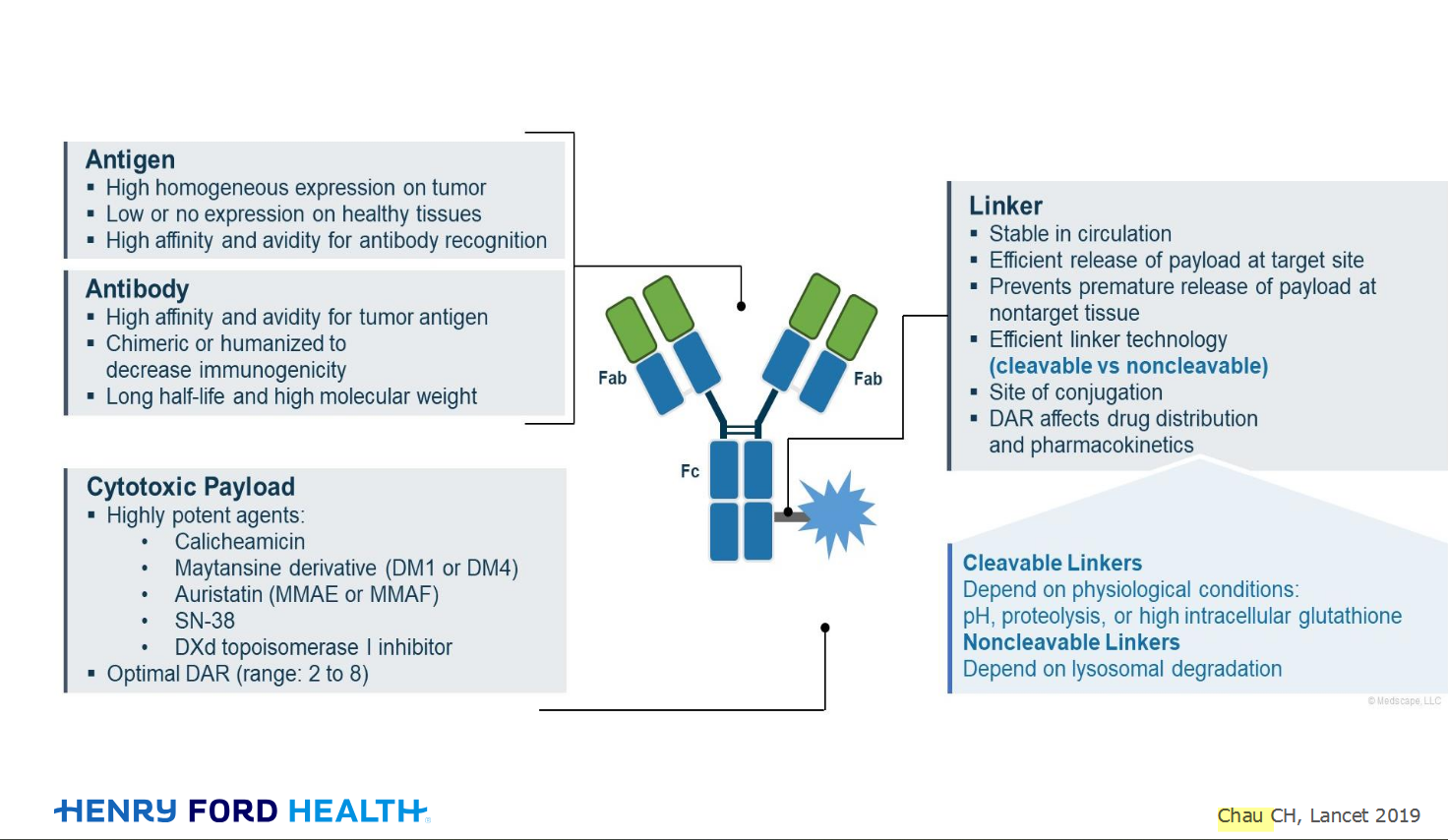
An antibody–drug conjugate (ADC) works a bit like a Trojan horse. It has three main components:
Bispecifics, or bispecific antibodies, are advanced immunotherapy drugs engineered to have two binding sites, allowing them to latch onto two different targets simultaneously, like a cancer cell and a T-cell, effectively...

Welcome to the new CancerGRACE.org! Explore our fresh look and improved features—take a quick tour to see what’s new.
Hi app.92, Welcome to Grace. I'm sorry this is late getting to you. And more sorry your mum is going through this. It's possible this isn't a pancoast tumor even though...