
Welcome!
Welcome to the new CancerGRACE.org! Explore our fresh look and improved features—take a quick tour to see what’s new.


Dr. Jack West is a medical oncologist and thoracic oncology specialist who is the Founder and previously served as President & CEO, currently a member of the Board of Directors of the Global Resource for Advancing Cancer Education (GRACE)
I'm very pleased to offer the excellent podcast produced from the recent webinar by Dr. Suresh Ramalingam, a leader in the lung cancer field who heads the Thoracic Oncology Program at Emory University in Atlanta. He's also a good friend I've known since our fellowship training days, and he was kind and generous enough to refuse the honorarium we offered for his participation, instead requesting that it be donated back and used for other GRACE programs. Instead, he was happy to do this entirely out of a commitment to the lung cancer community. This is part of a small series of programs supported by an educational grant from Eli Lilly, so we are now enabled to do an additional program because of his generosity.
His webinar provides a very brief historical overview of NSCLC in general and then advanced NSCLC in particular, including a historical perspective of the evolving standards of care first with chemotherapy alone, and then with the integration of targeted therapies. He describes how our approach now individualizes our treatment recommendations based on such issues as particular NSCLC histology, molecular factors, performance status, and sometimes age to offer what we hope will deliver the best combination of efficacy and safety for a patient.
Here is the audio and video versions of the podcast, along with the transcript and figures for the program.
[powerpress]
ramalingam-personalized-first-line-therapy-for-adv-nsclc-audio-podcast
ramalingam-personalized-first-line-therapy-for-adv-nsclc-transcript
ramalingam-personalized-first-line-therapy-for-adv-nsclc-figures
We'll provide the Q&A component of Dr. Ramalingam's presentation next, followed by the excellent webinar by Dr. Mark Socinski on treatment considerations following first line therapy for advanced NSCLC.
Please feel free to offer comments and raise questions in our
discussion forums.
Hi app.92, Welcome to Grace. I'm sorry this is late getting to you. And more sorry your mum is going through this. It's possible this isn't a pancoast tumor even though...
A Brief Tornado. I love the analogy Dr. Antonoff gave us to describe her presentation. I felt it earlier too and am looking forward to going back for deeper dive.
Dr. Singhi's reprise on appropriate treatment, "Right patient, right time, right team".
While Dr. Ryckman described radiation oncology as "the perfect blend of nerd skills and empathy".
I hope any...
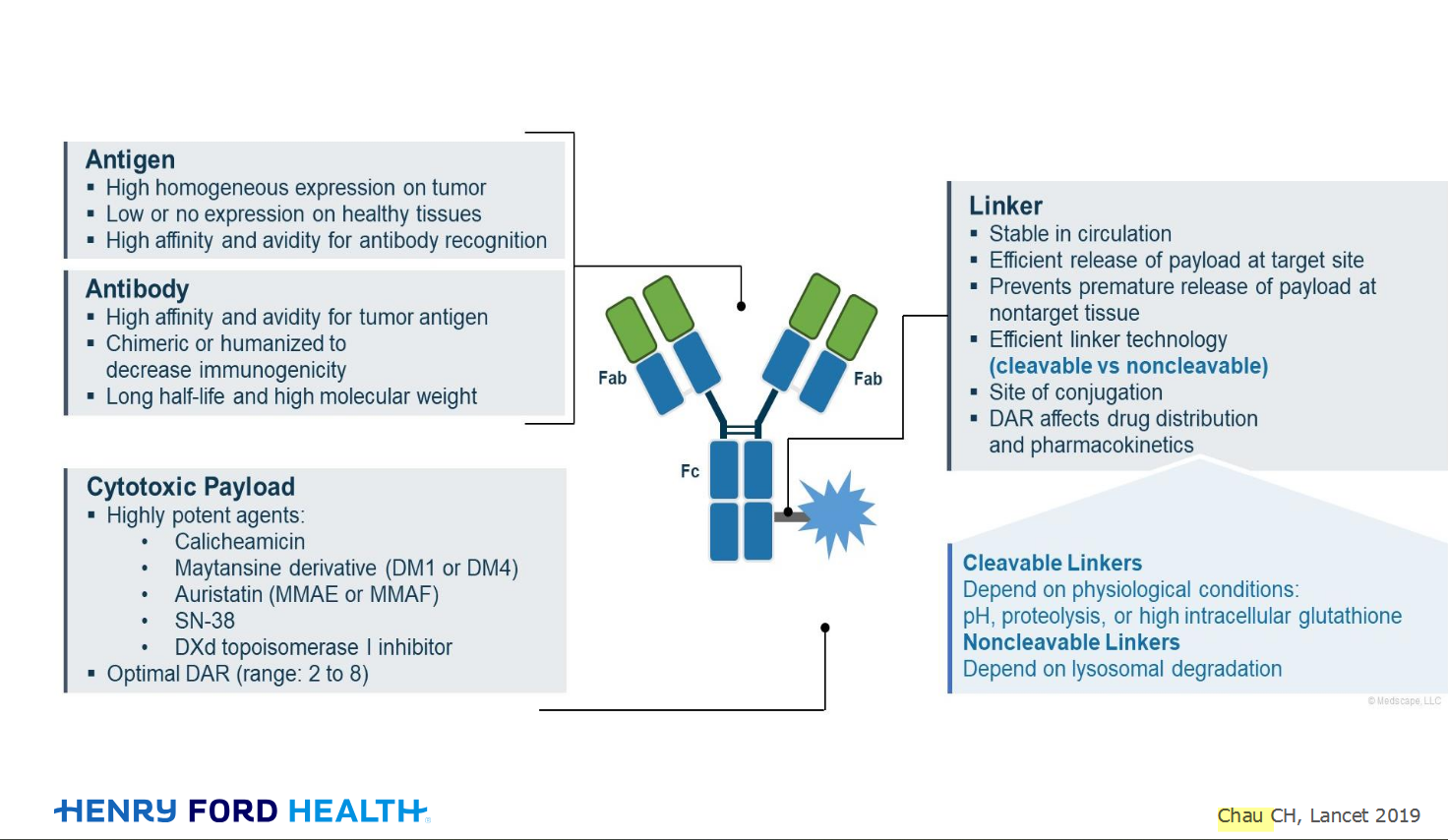
My understanding of ADCs is very basic. I plan to study Dr. Rous’ discussion to broaden that understanding.
Here's the webinar on YouTube. It begins with the agenda. Note the link is a playlist, which will be populated with shorts from the webinar on specific topics
An antibody–drug conjugate (ADC) works a bit like a Trojan horse. It has three main components:

Welcome to the new CancerGRACE.org! Explore our fresh look and improved features—take a quick tour to see what’s new.