
Welcome!
Welcome to the new CancerGRACE.org! Explore our fresh look and improved features—take a quick tour to see what’s new.




Chief of Hematology/Oncology and Medical Director at Memorial Cancer Institute, and Clinical Associate Professor of Medicine at Florida International University
Chief of Hematology/Oncology
Medical Director of Memorial Cancer Institute


We welcome Dr. Luis Raez, MD FACP FCCP, Chief of Hematology/Oncology and Medical Director at Memorial Cancer Institute, and Clinical Associate Professor of Medicine at Florida International University with 2017 updates to our Lung Cancer Video Library. In this recent video for GRACE, Dr. Raez discusses First Line Immunotherapy for Advanced Non-Small Cell Lung Cancer NSCLC.
TRANSCRIPTS download here Chief of Hematology/Oncology and Medical Director, Memorial Cancer Institute Clinical Associate Professor of Medicine, Florida International University
These are very exciting times because we have recently moved immunotherapy to first line, meaning new patients with stage IV non-small cell lung cancer or metastatic patients. Until recently immunotherapy was approved first for second line and based on some studies - very important - but immunotherapy, after that moved to the front line, so that new patients can have an opportunity to be treated. Specifically, the Pembrolizumab was moved to the front line based on a study in which the Pembrolizumab was compared against chemotherapy, Carboplatin combination that are the standard of care so far and Pembrolizumab was able to give better outcomes than the combination or amalgamation of chemotherapy but the most important thing in this news is that we are developing markers to try to discover which patients will respond to immunotherapy and which ones will not. The specific marker that probably everyone knows or cares about is PD-L1. In this specific study, the patients will benefit from immunotherapy for new patients if the PD-L1 expression in the tumor, we are checking in the tumor, is more than 50%. Immunotherapy front line was not approved for everybody, it was approved for this specific niche of patient that they will benefit. The rest of the patients will still need to get chemotherapy or target therapy based on molecular markers if they have any of these genetic alterations that we reference all the time, EGFR, ALK, ROS1. We only had one drug approved because unfortunately the other drug, Nivolumab, is already approved for second line. In a similar study, Nivolumab was much against chemotherapy and Nivolumab was unable to get a better progression free survival than the patients on chemotherapy. For that reason, we only have as a single agent so far, Pembrolizumab, approved in first line. Of course, there will be changes because we have other immunotherapy agents coming to the market soon and new studies coming soon but so far Pembrolizumab is only approved as a single agent in the front line.
Please feel free to offer comments and raise questions in our
discussion forums.
Dr. Singhi's reprise on appropriate treatment, "Right patient, right time, right team".
While Dr. Ryckman described radiation oncology as "the perfect blend of nerd skills and empathy".
I hope any...
My understanding of ADCs is very basic. I plan to study Dr. Rous’ discussion to broaden that understanding.
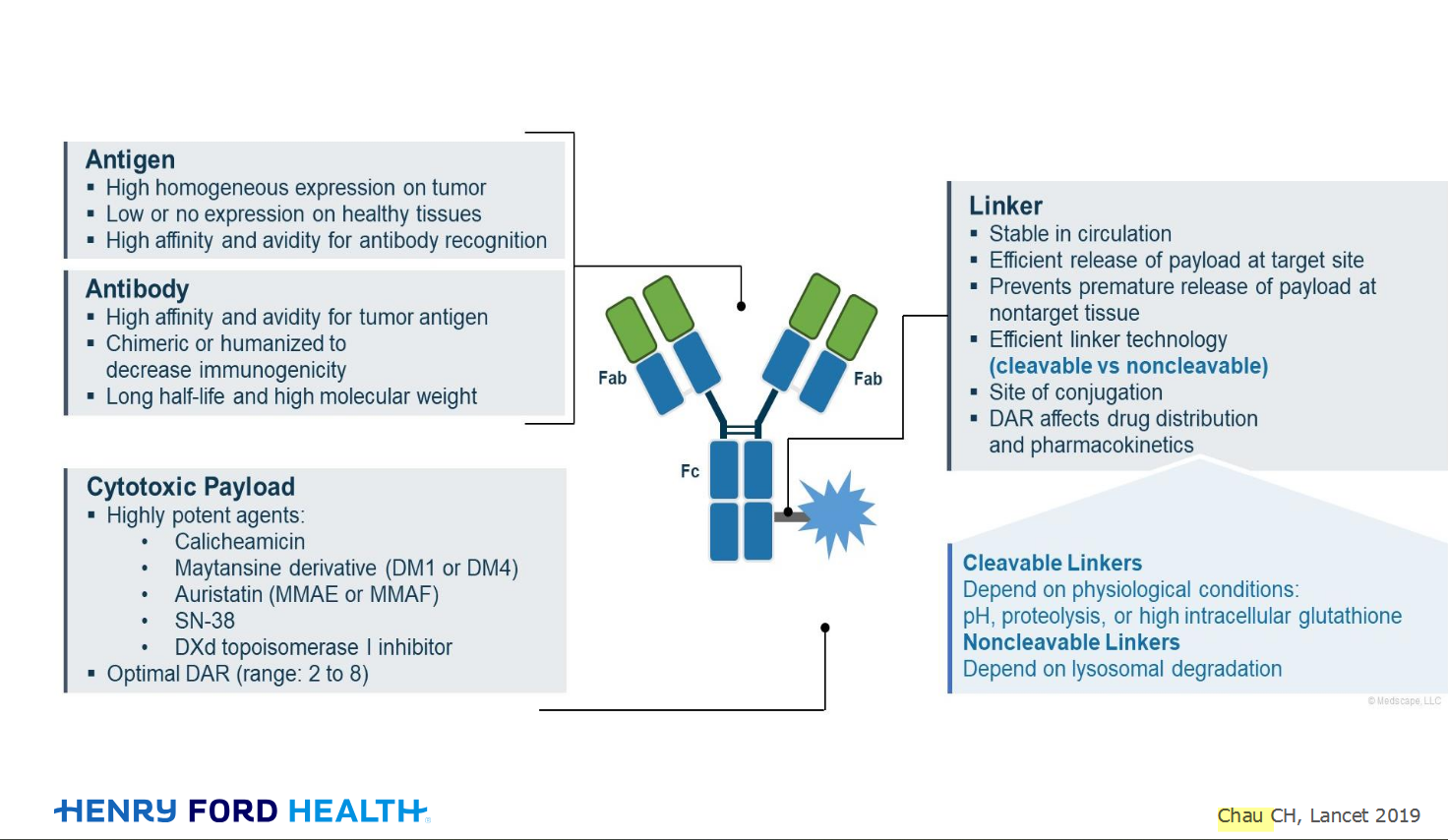
An antibody–drug conjugate (ADC) works a bit like a Trojan horse. It has three main components:
Bispecifics, or bispecific antibodies, are advanced immunotherapy drugs engineered to have two binding sites, allowing them to latch onto two different targets simultaneously, like a cancer cell and a T-cell, effectively...
The prefix “oligo–” means few. Oligometastatic (at diagnosis) Oligoprogression (during treatment)
There will be a discussion, “Studies in Oligometastatic NSCLC: Current Data and Definitions,” which will focus on what we...
Radiation therapy is primarily a localized treatment, meaning it precisely targets a specific tumor or area of the body, unlike systemic treatments (like chemotherapy) that affect the whole body.
The...

Welcome to the new CancerGRACE.org! Explore our fresh look and improved features—take a quick tour to see what’s new.
A Brief Tornado. I love the analogy Dr. Antonoff gave us to describe her presentation. I felt it earlier too and am looking forward to going back for deeper dive.