
Welcome!
Welcome to the new CancerGRACE.org! Explore our fresh look and improved features—take a quick tour to see what’s new.



Dr. Jack West is a medical oncologist and thoracic oncology specialist who is the Founder and previously served as President & CEO, currently a member of the Board of Directors of the Global Resource for Advancing Cancer Education (GRACE)
 There's been a theme with the inhibitors of the epidermal growth factor receptor (EGFR) -- both oral tyrosine kinase inhibitors (TKIs) and IV monoclonal antibodies -- that the patients who demonstrate good results with these agents tend to get a rash, while the patients who don't get a rash do poorly. We've even got an FAQ discussion of the association of rash and outcome on EGFR inhibitor therapy. That result has been seen in post-hoc analyses of the results in several trials, and not just in lung cancer, but I've been very reluctant to use this concept in my own clinical decision making. Why? A number of reasons. These are just a post-hoc analyses. Tarceva (erlotinib) is FDA approved for all previously treated patients with advanced NSCLC. You need to try the drug to know if a patient is going to get a rash. And importantly, some patients do extremely well with EGFR inhibitors despite not developing skin side effects.
Nevertheless, the recent results from the TOPICAL study, just published in the journal Lancet Oncology, adds more firepower to the argument that the question of whether a patient on an EGFR inhibitor develops a rash should be a factor in deciding whether to continue it. Specifically, the results suggest that patients who don't develop a rash in the first month on Tarceva do worse than the patients on placebo . Here's a brief video that describes the work:
[powerpress]
So here's my question: if you or someone you care for were inclined to try Tarceva but didn't develop a rash, would you stop it after a trial period of four weeks or so, or would you still want to refill the prescription for another month or two before a scan clarifies whether there is progression or not? Would you accept the concept that the development of rash may distinguish between those helped and those potentially even harmed from an EGFR inhibitor?
I think it may be time for me to update my perspective on the FAQ.
Please feel free to offer comments and raise questions in our
discussion forums.
Hi app.92, Welcome to Grace. I'm sorry this is late getting to you. And more sorry your mum is going through this. It's possible this isn't a pancoast tumor even though...
A Brief Tornado. I love the analogy Dr. Antonoff gave us to describe her presentation. I felt it earlier too and am looking forward to going back for deeper dive.
Dr. Singhi's reprise on appropriate treatment, "Right patient, right time, right team".
While Dr. Ryckman described radiation oncology as "the perfect blend of nerd skills and empathy".
I hope any...
My understanding of ADCs is very basic. I plan to study Dr. Rous’ discussion to broaden that understanding.
Here's the webinar on YouTube. It begins with the agenda. Note the link is a playlist, which will be populated with shorts from the webinar on specific topics
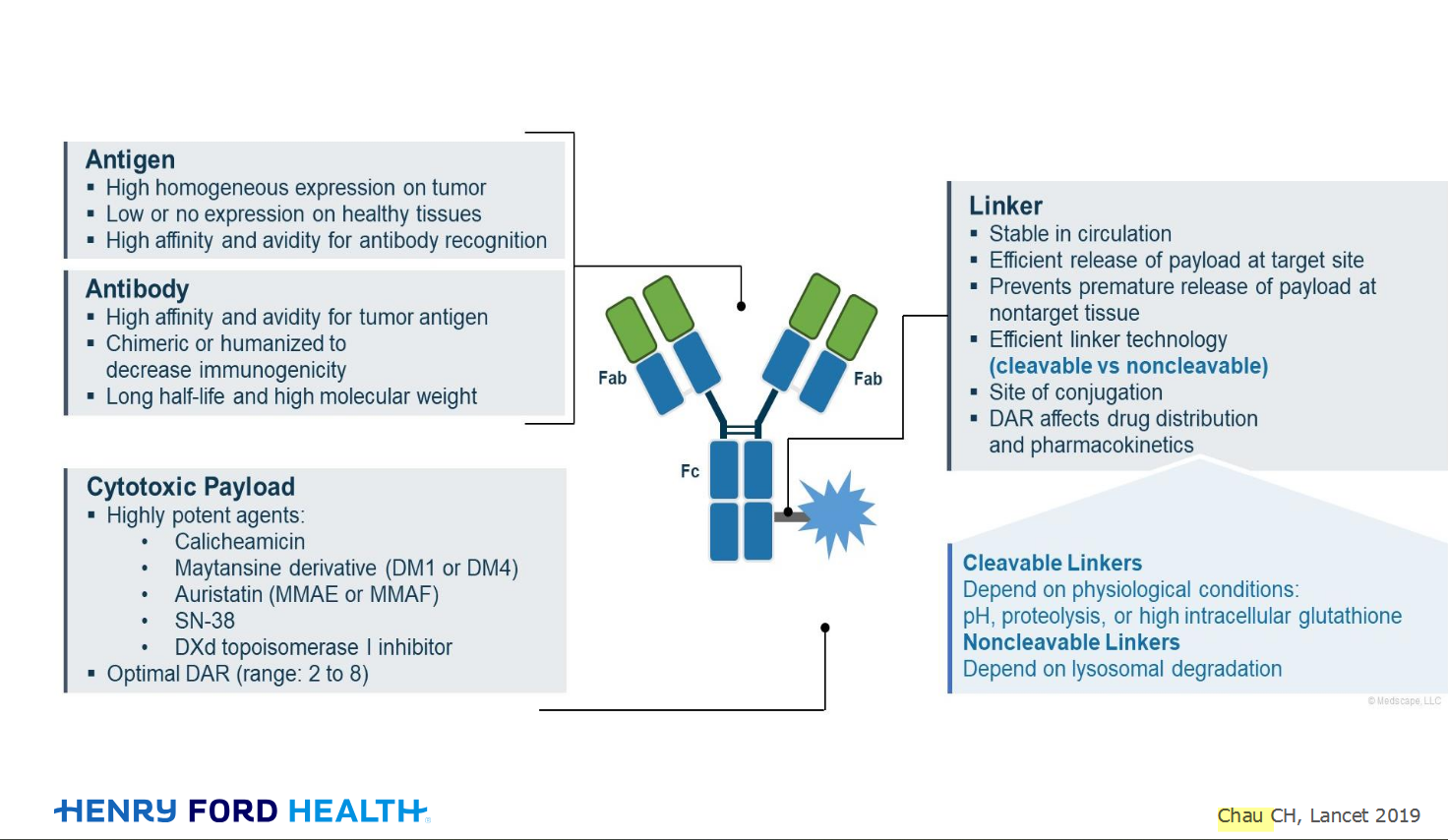
An antibody–drug conjugate (ADC) works a bit like a Trojan horse. It has three main components:

Welcome to the new CancerGRACE.org! Explore our fresh look and improved features—take a quick tour to see what’s new.