
Welcome!
Welcome to the new CancerGRACE.org! Explore our fresh look and improved features—take a quick tour to see what’s new.




Dr. Jack West is a medical oncologist and thoracic oncology specialist who is the Founder and previously served as President & CEO, currently a member of the Board of Directors of the Global Resource for Advancing Cancer Education (GRACE)
The second part of my conversation with Drs. Tom Hensing from North Shore Health System in Chicago and David Jackman from Dana Farber Cancer Institute in Boston covered a case of a relatively young, generally healthy woman diagnosed with a lung adenocarcinoma that turned out to be stage IV.
Here, we discuss our priorities for molecular testing and how the results of EGFR, KRAS, and EML4-ALK testing would alter our clinical recommendations. We then discuss the options for this patient, with special focus on how long to continue first line therapy and when and how to transition off of first line treatment into either observation or maintenance therapy.
Here's the audio and video podcasts of the discussion, along with the transcript and figures.
drs-hensing-and-jackman-molec-testing-sequence-of-rx-case-2-audio-podcast
drs-hensing-and-jackman-molec-testing-sequence-of-rx-case-2-transcript
drs-hensing-and-jackman-molec-testing-sequence-of-rx-case-2-figures
This program was sponsored by OSI Pharmaceuticals, who had no input in its content. We appreciate their support in making this activity possible.
Please feel free to offer comments and raise questions in our
discussion forums.

Dr. Singhi's reprise on appropriate treatment, "Right patient, right time, right team".
While Dr. Ryckman described radiation oncology as "the perfect blend of nerd skills and empathy".
I hope any...
My understanding of ADCs is very basic. I plan to study Dr. Rous’ discussion to broaden that understanding.
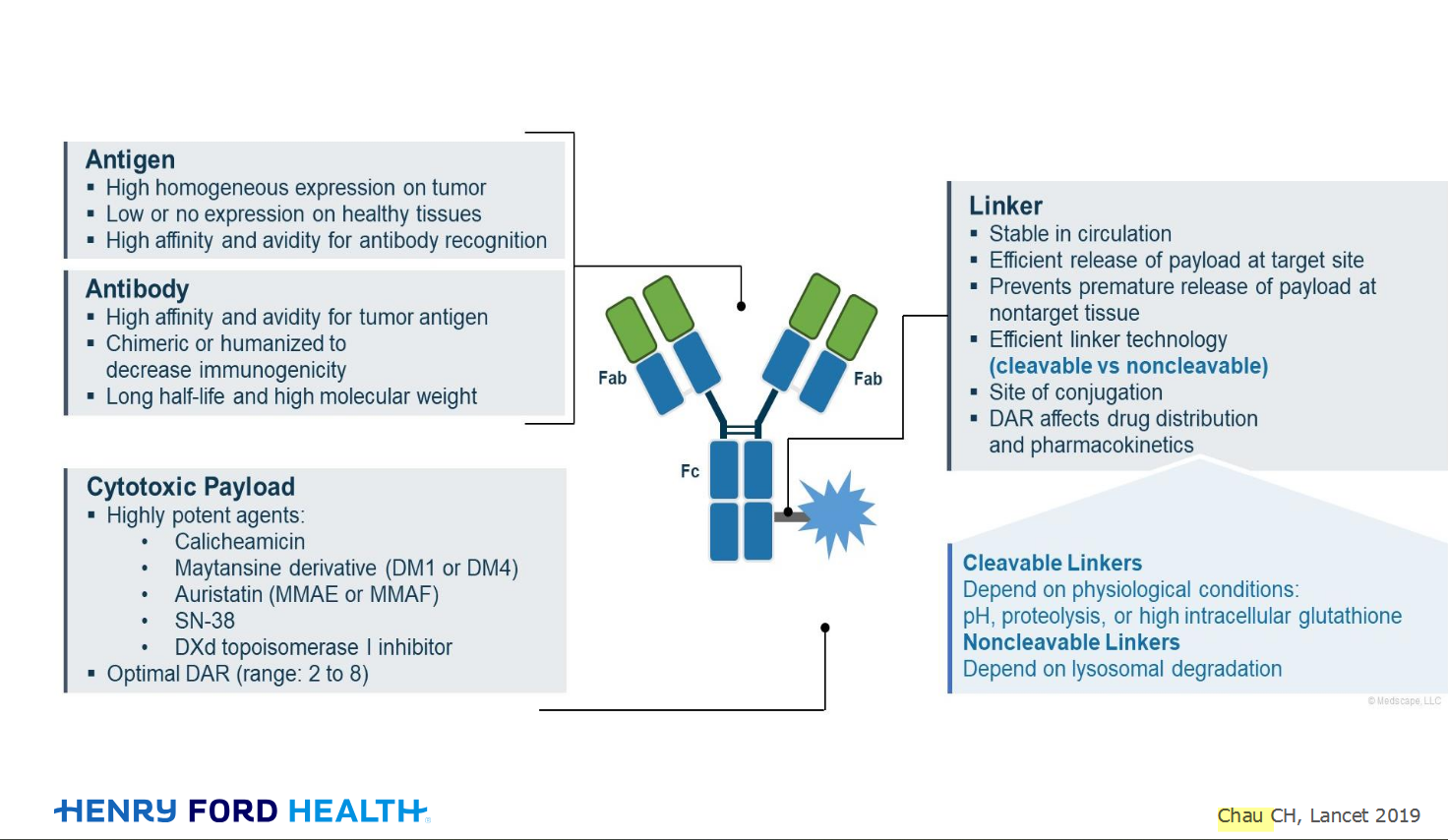
An antibody–drug conjugate (ADC) works a bit like a Trojan horse. It has three main components:
Bispecifics, or bispecific antibodies, are advanced immunotherapy drugs engineered to have two binding sites, allowing them to latch onto two different targets simultaneously, like a cancer cell and a T-cell, effectively...
The prefix “oligo–” means few. Oligometastatic (at diagnosis) Oligoprogression (during treatment)
There will be a discussion, “Studies in Oligometastatic NSCLC: Current Data and Definitions,” which will focus on what we...
Radiation therapy is primarily a localized treatment, meaning it precisely targets a specific tumor or area of the body, unlike systemic treatments (like chemotherapy) that affect the whole body.
The...

Welcome to the new CancerGRACE.org! Explore our fresh look and improved features—take a quick tour to see what’s new.
A Brief Tornado. I love the analogy Dr. Antonoff gave us to describe her presentation. I felt it earlier too and am looking forward to going back for deeper dive.