
Welcome!
Welcome to the new CancerGRACE.org! Explore our fresh look and improved features—take a quick tour to see what’s new.



Dr. Jack West is a medical oncologist and thoracic oncology specialist who is the Founder and previously served as President & CEO, currently a member of the Board of Directors of the Global Resource for Advancing Cancer Education (GRACE)
At ASCO a little over a month ago we learned the preliminary results of the SATURN trial that compared "maintenance" Tarceva (erlotinib), the oral EGFR inhibitor, to an oral placebo in patients who showed no progression after four cycles of first line chemotherapy. The results of the ASCO presentation, which showed a statistically significant improvement in progression-free survival but didn't include any information about overall survival, are summarized in a prior post about the SATURN trial. OSI Pharmaceuticals, the makers of Tarceva, have just put out a press release that there is also a significant improvement in overall survival among the recipients of maintenance Tarceva compared to placebo. Though no details were offered, the press release notes that more information will be presented at the upcoming World Conference on Lung Cancer in San Francisco at the end of this month. I'll be there, so readers should expect more information as soon as the data are made public.
What does this mean in terms of how lung cancer should be managed? It's definitely true that an overall survival benefit is a more compelling reason to change our treatment strategy than just an improvement in progression-free survival that isn't accompanied by an overall survival benefit. This news should markedly increase the probability that Tarceva will soon be approved by the FDA as a maintenance therapy for non-progressing patients with advanced NSCLC, in addition to its current approval as a second or third line treatment for these patients. But whether there will be much excitement about shifting to earlier use of Tarceva will probably depend on how much of a survival benefit is really shown. The concept of maintenance chemotherapy after first line chemo for advanced NSCLC has yet to really become pervasive, and that is associated with significant, approximately three month survival benefit in a study with Alimta (pemetrexed), which itself was recently approved by the FDA as a maintenance therapy. Maintenance Taxotere (docetaxel) has also been associated with a significant improvement in progression-free survival, but the two month improvement in overall survival wasn't quite statistically significant. I think many oncologists will want to compare the benefit is reported with Tarceva to the survival benefit with chemo. In the meantime, the SATURN trial shows us that the benefit of a maintenance strategy isn't limited to chemotherapy. For some patients, an EGFR inhibitor may be a particularly attractive option, and for some people, having an oral maintenance therapy choice may also have special value. More to follow, from the World Conference on Lung Cancer at the end of the month.
Please feel free to offer comments and raise questions in our
discussion forums.
Dr. Singhi's reprise on appropriate treatment, "Right patient, right time, right team".
While Dr. Ryckman described radiation oncology as "the perfect blend of nerd skills and empathy".
I hope any...
My understanding of ADCs is very basic. I plan to study Dr. Rous’ discussion to broaden that understanding.
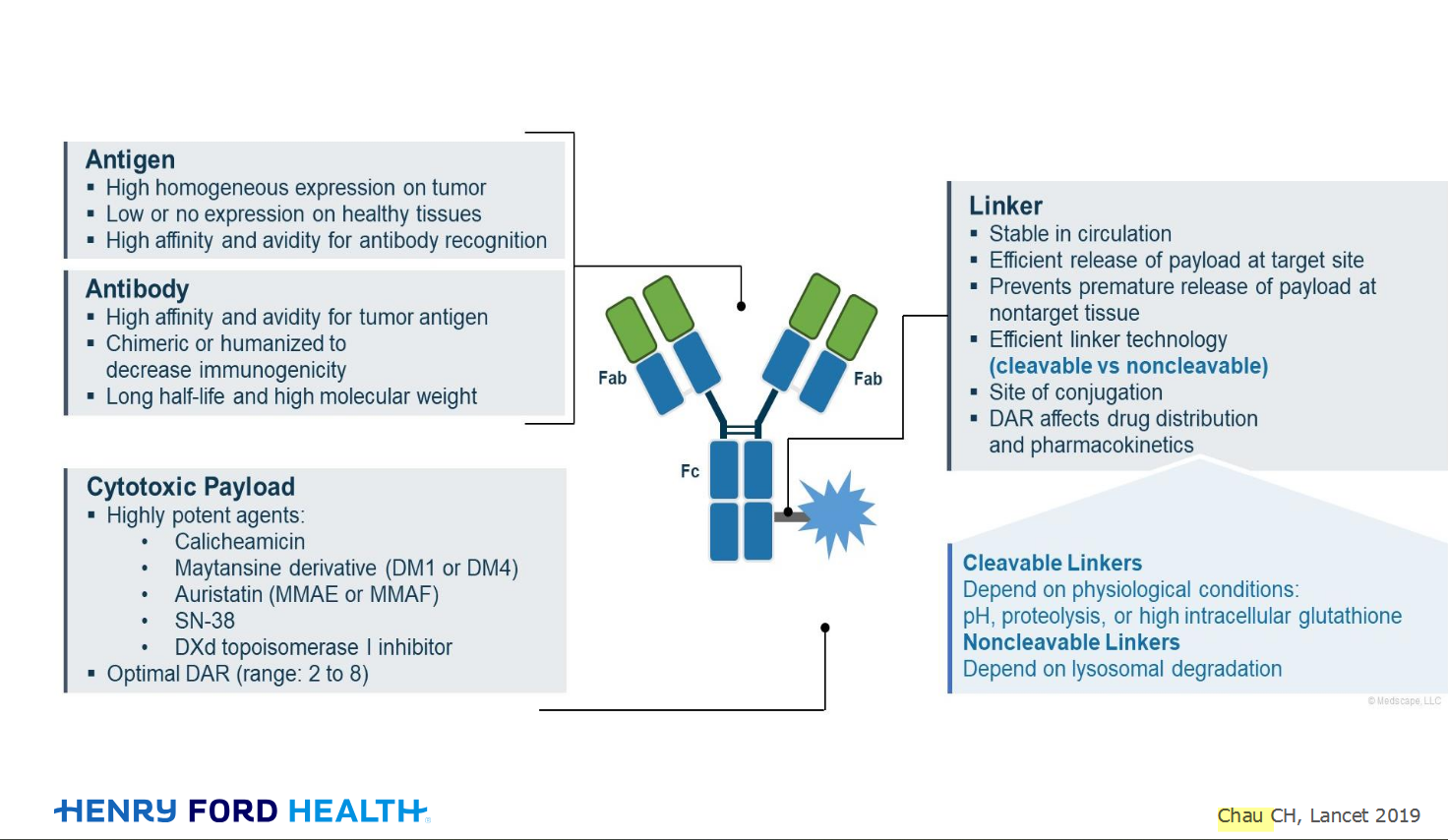
An antibody–drug conjugate (ADC) works a bit like a Trojan horse. It has three main components:
Bispecifics, or bispecific antibodies, are advanced immunotherapy drugs engineered to have two binding sites, allowing them to latch onto two different targets simultaneously, like a cancer cell and a T-cell, effectively...
The prefix “oligo–” means few. Oligometastatic (at diagnosis) Oligoprogression (during treatment)
There will be a discussion, “Studies in Oligometastatic NSCLC: Current Data and Definitions,” which will focus on what we...
Radiation therapy is primarily a localized treatment, meaning it precisely targets a specific tumor or area of the body, unlike systemic treatments (like chemotherapy) that affect the whole body.
The...

Welcome to the new CancerGRACE.org! Explore our fresh look and improved features—take a quick tour to see what’s new.
A Brief Tornado. I love the analogy Dr. Antonoff gave us to describe her presentation. I felt it earlier too and am looking forward to going back for deeper dive.