
Welcome!
Welcome to the new CancerGRACE.org! Explore our fresh look and improved features—take a quick tour to see what’s new.



Drs. Ben Solomon, Leora Horn, & Jack West review impressive data demonstrating a striking survival improvement from successful efforts at smoking cessation among smokers undergoing lung cancer CT screening.
[powerpress]
[ratingwidget post_id=0]
Please feel free to offer comments and raise questions in our Discussion Forums.
Transcript
Dr. West: Finally, there’s a fair bit — we cover a lot of ground at the World Conference on Lung Cancer, and one of the topics that I think is good to have gotten airplay is smoking cessation, and tobacco interests and policy. I was surprised, and it was sobering to see a presentation at the Presidential Symposium that suggested that smoking cessation efforts, in the process of lung cancer screening, makes a bigger interest — has a bigger impact on patient survival, not necessarily from lung cancer, but potentially from cardiovascular issues, than picking up lung cancer. Were there things about the smoking cessation discussions during this meeting that had an impact for you, or that you found particularly surprising?
Dr. Solomon: I’m not surprised with those findings, I think smoking has a huge range of detrimental health effects, even outside lung cancer — other types of cancer, as you pointed out, cardiovascular disease as well, and I think it’s important to have strong smoking cessation measures, both at the levels of doctors and patients, but also as a society, and at a governmental level. In Australia, we’ve recently introduced plain paper packaging of cigarettes, so instead of having very attractive, different colored cigarette boxes, the government has chosen that the nastiest shade of green, sort of a puke-colored, green-brown color, to wrap cigarette packets in now. Tobacco companies are taking the government to court because they know that it will impact on sales, but I think those sorts of measures together with, as unpopular as it may be, taxes on tobacco, are things that have real impacts on smoking rates in the population, and in young people.
Dr. West: Yeah, absolutely. It turns out the biggest impact you can have is raising taxes, especially in young smokers. Your thoughts — anything to add?
Dr. Horn: So, I think what Australia is doing is incredible, and I remember hearing about it at the last meeting. You know, the study that they presented with smoking cessation screening — the problem is, most patients who are being screened are over age 55, so they’ve been smoking for thirty years. And so, you know, the more that we can do to stop young people from ever starting is really going to be the key to reducing smoking-related cancers.
Dr. West: Thank you so much for joining me.
Dr. Solomon: Thanks, Jack.
Dr. Horn: Thanks, Jack!
Please feel free to offer comments and raise questions in our
discussion forums.


A Brief Tornado. I love the analogy Dr. Antonoff gave us to describe her presentation. I felt it earlier too and am looking forward to going back for deeper dive.
Dr. Singhi's reprise on appropriate treatment, "Right patient, right time, right team".
While Dr. Ryckman described radiation oncology as "the perfect blend of nerd skills and empathy".
I hope any...
My understanding of ADCs is very basic. I plan to study Dr. Rous’ discussion to broaden that understanding.
Here's the webinar on YouTube. It begins with the agenda. Note the link is a playlist, which will be populated with shorts from the webinar on specific topics
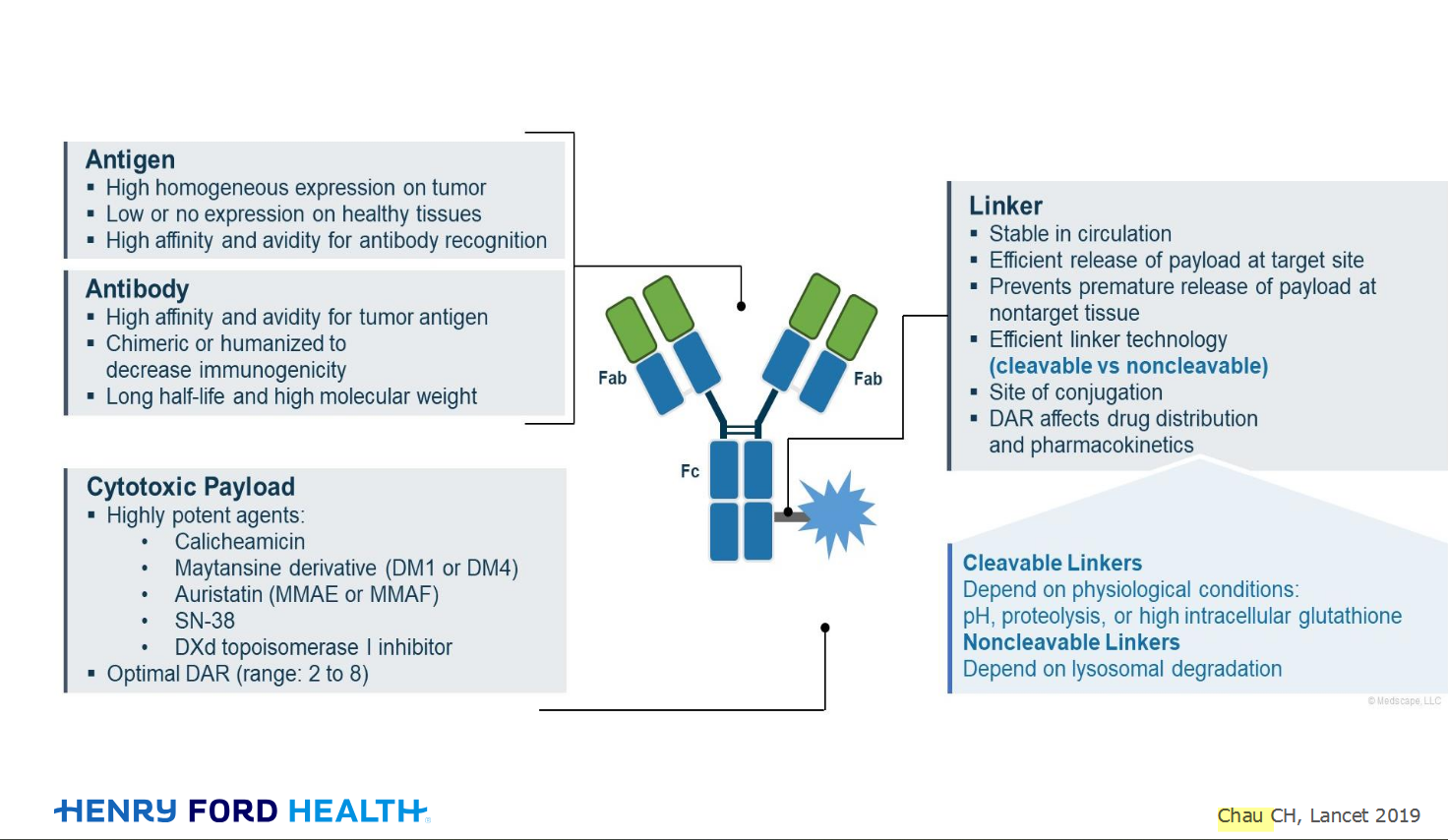
An antibody–drug conjugate (ADC) works a bit like a Trojan horse. It has three main components:
Bispecifics, or bispecific antibodies, are advanced immunotherapy drugs engineered to have two binding sites, allowing them to latch onto two different targets simultaneously, like a cancer cell and a T-cell, effectively...

Welcome to the new CancerGRACE.org! Explore our fresh look and improved features—take a quick tour to see what’s new.
Hi app.92, Welcome to Grace. I'm sorry this is late getting to you. And more sorry your mum is going through this. It's possible this isn't a pancoast tumor even though...